
Posted by scispectrum on 4th Mar 2026
BOD Incubator vs Bacteriological Incubator: What’s the Difference? (2026 Guide)
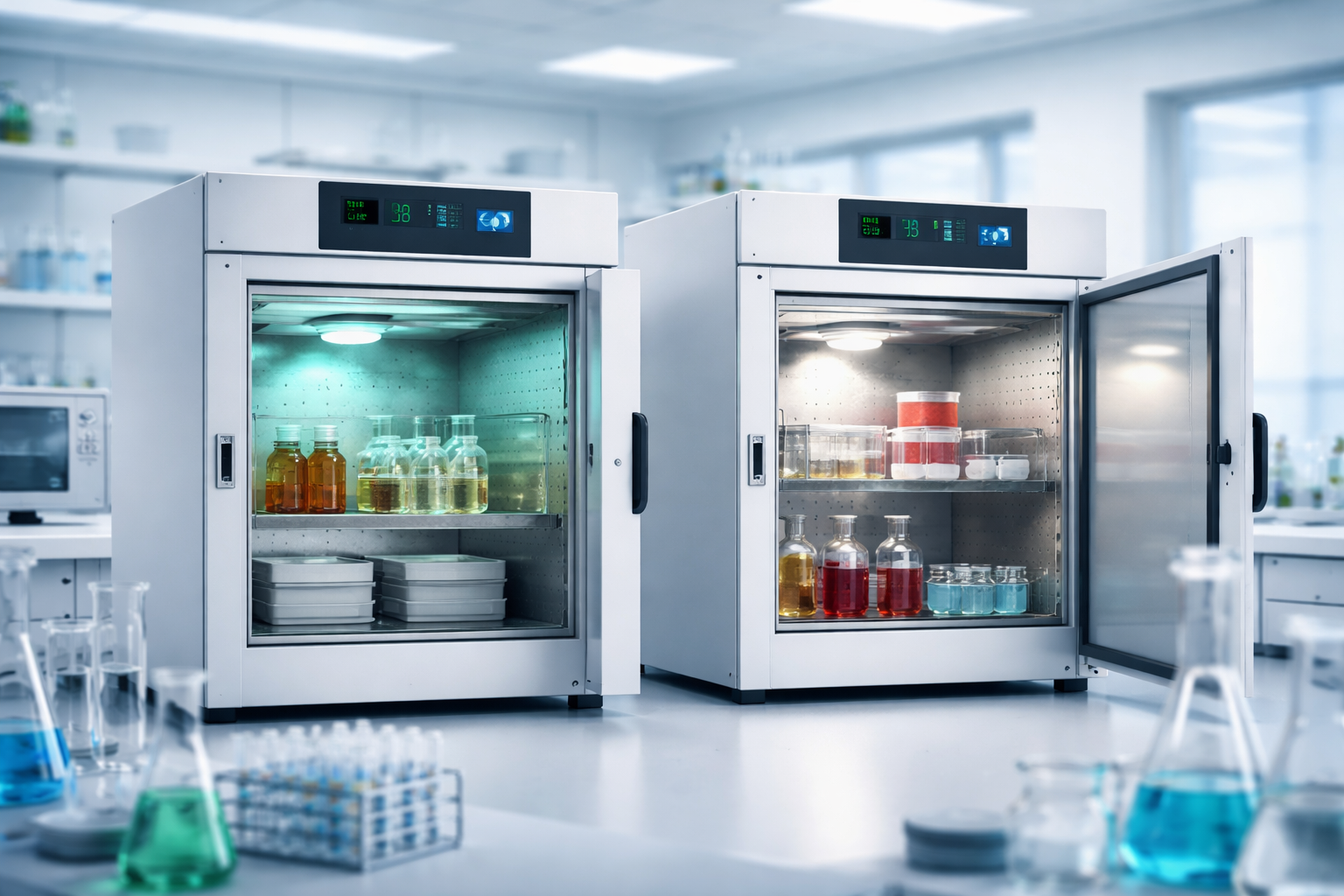
In the modern laboratory landscape of 2026, precision is no longer just a goal it is a regulatory requirement. Whether you are managing a pharmaceutical quality control wing in Hyderabad or a water treatment facility in Chennai, choosing the right thermal equipment is foundational to your data integrity.
One of the most common points of confusion for procurement officers and lab managers is deciding between a BOD Incubator vs Bacteriological Incubator. While they may look identical from the outside, their internal engineering and functional capabilities serve entirely different scientific purposes. As environmental and health compliance standards in India become more stringent, understanding these differences is essential to ensure your lab remains efficient and compliant.
What is a BOD Incubator?
A BOD Incubator, or Biochemical Oxygen Demand incubator, is often referred to as a "low-temperature" or "cooled" incubator. Its primary purpose is to provide a controlled environment for the incubation of samples at temperatures both above and below the ambient room temperature.
Working Principle and Temperature Range
Unlike standard incubators, a BOD incubator is equipped with both a heating and a cooling system (refrigeration). This allows the unit to maintain a highly stable environment, typically ranging from 5°C to 60°C. The ability to pull the temperature down below the room’s ambient level is what sets it apart.
Applications
These units are the workhorses of environmental testing equipment and water testing laboratories. They are primarily used to determine the level of organic pollution in water samples by calculating the oxygen consumed by microorganisms during a specific period (usually 5 days at 20°C).
Key Features of BOD Incubators:
- Integrated Refrigeration: Powerful compressors for sub-ambient cooling.
- High Temperature Uniformity: Essential for sensitive biochemical assays.
- Air Circulation Fans: Ensures even distribution of air throughout the chamber.
- Observation Windows: Often feature an internal glass door to view samples without disturbing the temperature.
What is a Bacteriological Incubator?
A Bacteriological Incubator is designed specifically for the growth and storage of bacterial cultures. These units are staples in microbiology lab equipment where the goal is to provide a warm, stable environment that mimics the natural growth conditions of microbes.
Working Principle and Temperature Range
Bacteriological incubators generally rely on heating elements only. Because most human pathogens and common bacteria thrive at or near human body temperature (37°C), these incubators typically operate in a range from ambient +5°C to 60°C or 70°C. They cannot cool down; they can only heat up.
Applications
These are widely used in pharmaceutical quality control, hospital pathology labs, and food testing facilities for routine culture incubation, shelf-life testing, and fermentation studies.
Key Features of Bacteriological Incubators:
- Natural or Forced Convection: Options for air movement depending on the sensitivity of the culture.
- Simple PID Controllers: Focus on maintaining a set "warm" temperature.
- Cost-Efficiency: Generally more affordable due to the absence of a cooling compressor.
- Compact Design: Often available in smaller benchtop sizes for busy clinical labs.
BOD Incubator vs Bacteriological Incubator: Key Differences
To help you make an informed decision, here is a direct comparison of the two units.
|
Feature |
BOD Incubator |
Bacteriological Incubator |
|
Full Form |
Biochemical Oxygen Demand |
N/A |
|
Temperature Range |
5°C to 60°C (Heating & Cooling) |
Ambient +5°C to 70°C (Heating only) |
|
Cooling Mechanism |
Yes (Compressor/Refrigeration) |
No |
|
Primary Use |
Water analysis & Environmental testing |
Bacterial culture & Fungal growth |
|
Energy Consumption |
Higher (due to refrigeration) |
Lower |
|
Typical Temperature |
20°C (for BOD tests) |
37°C (for human pathogens) |
|
Price Point |
Premium |
Economical |
When Should You Choose a BOD Incubator?
A BOD incubator is an investment in versatility. You should opt for this model if your facility handles:
- Water & Wastewater Testing: If you are performing standard BOD tests (requiring 20°C), a cooling incubator is non-negotiable.
- Environmental Compliance: Labs working with pollution control boards require the precise, low-temperature stability these units provide.
- Plant Germination & Insect Studies: Many botanical or entomological studies require temperatures lower than the 25°C–30°C typical of Indian laboratory environments.
When Should You Choose a Bacteriological Incubator?
If your lab's primary focus is "warm" incubation, a bacteriological incubator is the more logical and cost-effective choice.
- Routine Microbiology: For growing E. coli, Salmonella, or other common bacteria at 37°C.
- Pharmaceutical QA/QC: For sterility testing and incubation of media plates that do not require cooling.
- Clinical Diagnostics: Ideal for hospital labs processing patient samples where the ambient temperature is already lower than the incubation target.
Key Buying Considerations in 2026
As you browse for a BOD Incubator in India, keep these 2026-specific factors in mind:
1. Digital PID Controllers & Connectivity
Modern labs now require data logging. Look for incubators with RS-485 or Wi-Fi connectivity that allow you to monitor temperature fluctuations remotely via a smartphone or PC.
2. Temperature Uniformity
A high-quality unit should have a variance of no more than $\pm 0.5\text{°C}$. Inconsistent heating or cooling leads to "hot spots," which can ruin your culture results and lead to expensive re-testing.
3. Insulation Quality
With rising energy costs in India, high-density PUF (Polyurethane Foam) insulation is critical. It maintains the internal temperature longer during power cuts and reduces the load on the compressor.
4. Compliance Requirements
Ensure the equipment is CE certified and meets IQ/OQ/PQ documentation standards, especially if you are in the pharmaceutical or export-oriented food industry.
5. After-Sales Support
The Laboratory Incubator Price is only one part of the cost. Ensure the manufacturer has a service network in major Indian hubs like Delhi, Mumbai, Bangalore, or Ahmedabad to handle annual maintenance and calibration.
| Model | Capacity | Type | Best For |
|---|---|---|---|
| REMI RHI-80 Hot Air Incubator | 80 L | Hot Air | Routine microbiology incubation |
| REMI CI-6 Plus Cooling Incubator | 200 L | Cooling | BOD testing & water analysis |
| REMI CI-10 Plus LCD Cooling Incubator | 280 L | Cooling | Research labs & stability studies |
| Dry Bath Incubator SKY-1326/1327 | Block Type | Dry Bath | Biochemical & enzyme applications |
Conclusion
The choice between a BOD Incubator vs Bacteriological Incubator boils down to one question: Do you need to go below room temperature?
If your answer is yes or if you need a multi-purpose unit that can handle both warm and cool cycles the BOD incubator is your best bet. If you are strictly performing bacterial growth at temperatures above 30°C, a bacteriological incubator will serve you efficiently while saving on your initial budget and energy bills.
Investing in high-quality environmental testing equipment ensures that your lab stays at the forefront of scientific accuracy.