
Posted by scispectrum on 24th Mar 2026
How to Calibrate a pH Meter for Accurate Results (Step-by-Step Guide)
Table of Contents
-
Introduction
-
Why is pH Meter Calibration Important?
-
Materials Required for Calibration
-
Step-by-Step pH Meter Calibration Process
-
Step 1: Turn on the pH Meter
-
Step 2: Rinse the Electrode
-
Step 3: Calibrate with pH 7 Buffer (Neutral Point)
-
Step 4: Calibrate with Second Buffer (pH 4 or pH 10)
-
Step 5: Optional Third-Point Calibration
-
Step 6: Final Rinse and Storage
-
-
Common Mistakes to Avoid
-
Tips for Maintaining a pH Meter
-
Conclusion
Introduction
Accurate pH measurement is essential in many fields, including laboratories, water testing, food processing, pharmaceuticals, and environmental monitoring. Even a small error in pH readings can lead to incorrect results, affecting product quality, research outcomes, and compliance with standards.
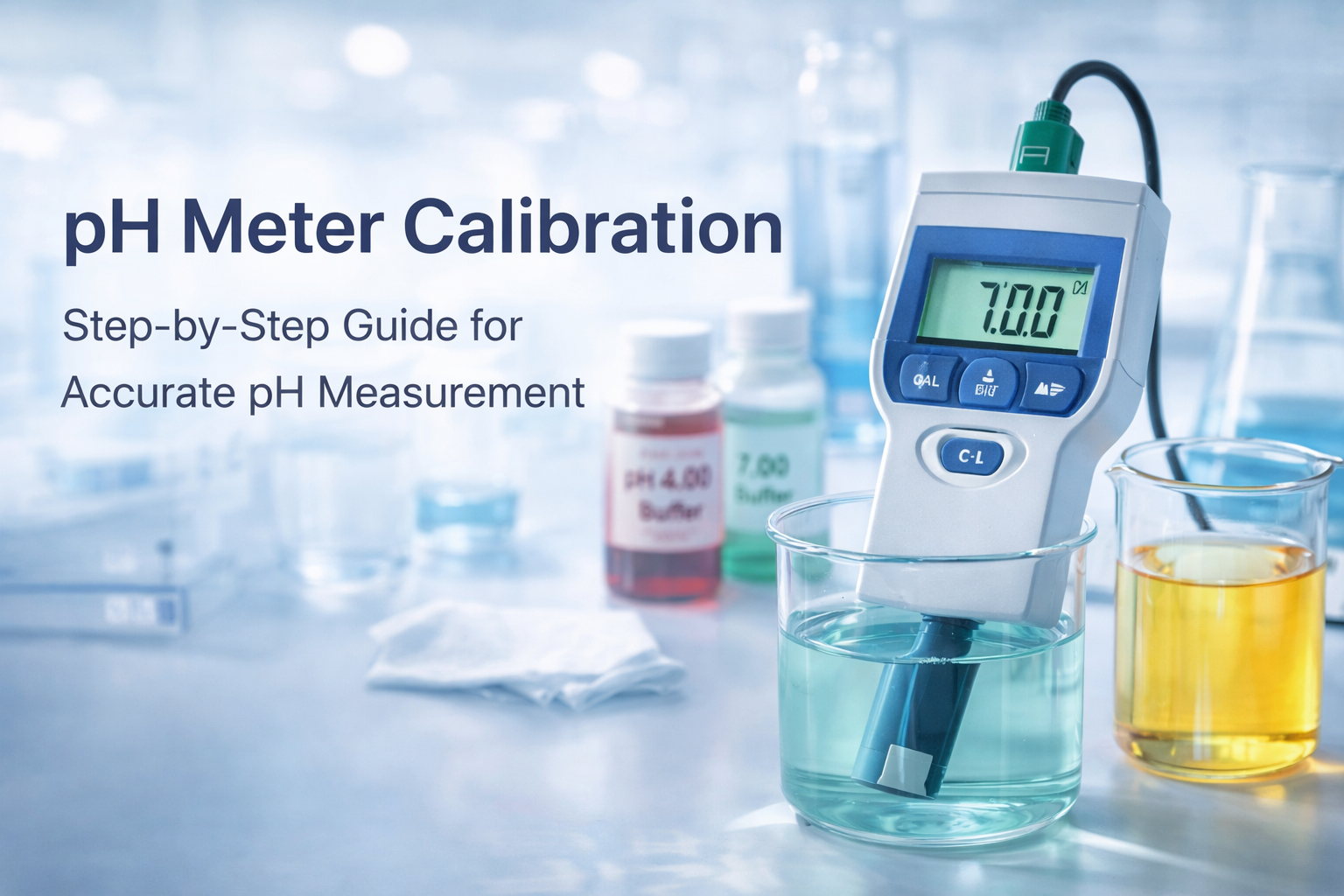
To ensure reliable measurements, regular pH meter calibration is necessary. Calibration aligns the instrument with known standards, helping maintain accuracy and consistency. In this guide, we will explain how to calibrate a pH meter step by step, along with tips to avoid common mistakes.
Why is pH Meter Calibration Important?
Calibration is a critical step in maintaining the accuracy of a pH meter. Over time, the electrode can drift due to usage, contamination, or aging, leading to inaccurate readings.
Key reasons why calibration is important:
- Ensures accurate and reliable measurements
- Compensates for electrode drift over time
- Improves consistency in test results
- Essential for quality control and compliance
Without proper calibration, even high-quality pH meters can produce incorrect readings.
Materials Required for Calibration
Before starting the calibration process, make sure you have the following materials:
- pH buffer solutions (commonly pH 4.0, pH 7.0, and pH 10.0)
- Distilled or deionized water
- Clean beakers or containers
- Lint-free tissue or soft cloth
- pH meter with electrode
Using fresh and uncontaminated buffer solutions is essential for accu
rate calibration.
Browse our full range of pH meters here
Step-by-Step pH Meter Calibration Process
Follow these steps to calibrate your pH meter correctly:
Step 1: Turn on the pH Meter
Switch on the pH meter and allow it to stabilize according to the manufacturer’s instructions.
Step 2: Rinse the Electrode
Rinse the electrode with distilled water to remove any residue from previous measurements. Gently blot it dry with a lint-free tissue (do not rub).
Step 3: Calibrate with pH 7 Buffer (Neutral Point)
Immerse the electrode in the pH 7 buffer solution.
Wait for the reading to stabilize, then adjust the meter to match the buffer value if required.
Step 4: Calibrate with Second Buffer (pH 4 or pH 10)
Rinse the electrode again and place it in either:
- pH 4 buffer (for acidic range), or
- pH 10 buffer (for alkaline range)
Allow the reading to stabilize and confirm or adjust calibration.
Step 5: Optional Third-Point Calibration
For higher accuracy, repeat the process with the third buffer solution (pH 10 or pH 4). This is especially useful for precise laboratory work.
Step 6: Final Rinse and Storage
After calibration, rinse the electrode with distilled water and store it properly in a storage solution or electrode cap.
Common Mistakes to Avoid
Avoiding these common mistakes can significantly improve your calibration accuracy:
- Not rinsing the electrode between buffers, leading to contamination
- Using expired or contaminated buffer solutions
- Touching or wiping the electrode harshly, which can damage it
- Calibrating at incorrect temperatures
- Skipping regular calibration
Proper handling and attention to detail are essential for accurate results.
Tips for Maintaining a pH Meter
Regular maintenance helps extend the life of your pH meter and ensures consistent performance.
- Store the electrode properly in a recommended storage solution
- Clean the electrode regularly to remove deposits
- Calibrate frequently, especially before critical measurements
- Avoid exposing the electrode to extreme conditions
- Replace the electrode when performance declines
Maintaining your pH meter ensures reliable readings and long-term usability.
Conclusion
Calibrating a pH meter is a simple but essential process for ensuring accurate and reliable pH measurements. By following the correct calibration steps and using proper techniques, you can avoid errors and maintain consistency in your results.
From laboratory testing to industrial applications, proper calibration plays a key role in quality control, research accuracy, and compliance with standards. Regular calibration, combined with good maintenance practices, ensures that your pH meter continues to deliver precise and dependable performance.