
Posted by scispectrum on 30th Mar 2026
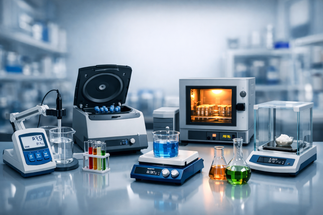
Top 10 Essential Lab Instruments Every Laboratory Must Have in 2026
Table of Contents
- Introduction
- pH Meter
- Analytical Balance
- Centrifuge
- Spectrophotometer
- Hot Air Oven
- Incubator
- Magnetic Stirrer
- Conductivity Meter
- TDS Meter
- Turbidity Meter
- Comparison Table
- Buying Guide: How to Choose the Right Lab Instruments
- Conclusion
Introduction
Laboratories play a critical role in research, quality control, diagnostics, and industrial processes. Whether it’s a research lab, educational institution, or testing facility, having the right laboratory instruments is essential for ensuring accuracy, efficiency, and reliable results.
With rapid advancements in technology, modern labs require precise and dependable equipment to meet growing demands. In this guide, we’ll explore the top 10 essential lab instruments every laboratory must have in 2026 and how they contribute to better performance and productivity.
1. pH Meter
A pH meter is used to measure the acidity or alkalinity of a solution.
How it works:
It uses an electrode to detect hydrogen ion activity and converts it into a pH value.
Applications:
- Water quality testing
- Food and beverage industry
- Chemical laboratories
Why it’s essential:
Accurate pH measurement is crucial for maintaining product quality and experimental consistency.
Explore our range of pH meters:
2. Analytical Balance
An analytical balance is a high-precision instrument used for measuring mass with extreme accuracy.
How it works:
It uses electromagnetic force restoration to measure small weights precisely.
Applications:
- Chemical analysis
- Pharmaceutical labs
- Research experiments
Why it’s essential:
Even minor measurement errors can impact results, making this instrument indispensable.
3. Centrifuge
A centrifuge separates components of a mixture based on density.
How it works:
It spins samples at high speed, causing heavier particles to settle at the bottom.
Applications:
- Blood sample analysis
- DNA/RNA separation
- Chemical processing
Why it’s essential:
It significantly speeds up separation processes and improves efficiency.
4. Spectrophotometer
A spectrophotometer measures how much light a sample absorbs.
How it works:
It passes light through a sample and measures absorbance at specific wavelengths.
Applications:
- Chemical analysis
- Pharmaceutical testing
- Environmental monitoring
Why it’s essential:
Provides accurate quantitative analysis of substances.
5. Hot Air Oven
A hot air oven is used for sterilization using dry heat.
How it works:
It circulates hot air at high temperatures to eliminate microorganisms.
Applications:
- Sterilizing glassware
- Material testing
- Laboratory drying
Why it’s essential:
Prevents contamination and ensures safe lab practices.
6. Incubator
An incubator maintains controlled temperature conditions for sample growth.
How it works:
It regulates temperature and sometimes humidity for biological samples.
Applications:
- Microbiology
- Cell culture
- Bacterial growth
Why it’s essential:
Provides a stable environment for experiments and research.
7. Magnetic Stirrer
A magnetic stirrer is used to mix liquids efficiently.
How it works:
It uses a rotating magnetic field to spin a stir bar inside the liquid.
Applications:
- Chemical mixing
- Solution preparation
- Research labs
Why it’s essential:
Ensures uniform mixing without contamination.
8. Conductivity Meter
A conductivity meter measures the ability of a solution to conduct electricity.
How it works:
It detects ionic concentration in a solution.
Applications:
- Water testing
- Environmental monitoring
- Industrial processes
Why it’s essential:
Helps assess water purity and chemical composition.
9. TDS Meter
A TDS meter measures total dissolved solids in water.
How it works:
It estimates dissolved substances based on electrical conductivity.
Applications:
- Drinking water testing
- Aquaculture
- Water treatment plants
Why it’s essential:
Ensures water safety and quality.
10. Turbidity Meter
A turbidity meter measures the cloudiness of liquids.
How it works:
It detects light scattered by particles in the liquid.
Applications:
- Water quality analysis
- Wastewater treatment
- Environmental labs
Why it’s essential:
Critical for monitoring water clarity and contamination.
Comparison Table
|
Instrument |
Primary Use |
Common Applications |
|
pH Meter |
Measure acidity/alkalinity |
Water testing, food industry |
|
Analytical Balance |
Precise weighing |
Labs, pharma, research |
|
Centrifuge |
Separation |
Medical, chemical labs |
|
Spectrophotometer |
Light absorbance |
Analysis, research |
|
Hot Air Oven |
Dry heat sterilization |
Labs, testing |
|
Incubator |
Controlled environment |
Microbiology |
|
Magnetic Stirrer |
Mixing liquids |
Chemical labs |
|
Conductivity Meter |
Ion concentration |
Water testing |
|
TDS Meter |
Dissolved solids |
Water quality |
|
Turbidity Meter |
Liquid clarity |
Environmental labs |
Buying Guide: How to Choose the Right Lab Instruments
Choosing the right equipment is crucial for achieving reliable results.
Key factors to consider:
- Accuracy & Calibration: Always choose instruments with high precision
- Build Quality: Durable instruments ensure long-term use
- Application Needs: Select based on your lab requirements
- Ease of Use: User-friendly interfaces improve efficiency
- Budget vs Performance: Balance cost with quality
- After-Sales Support: Ensure service and calibration support availability
Conclusion
Equipping your laboratory with the right instruments is essential for achieving accurate, reliable, and efficient results. From basic tools like pH meters to advanced equipment like spectrophotometers, each instrument plays a vital role in modern laboratories.
Investing in high-quality laboratory equipment not only improves performance but also ensures long-term reliability and compliance with industry standards.