
Posted by Scispectrum on 8th Dec 2025
Best GPS Tracking Devices for Trekking in 2025 – Features, Uses & Buying Guide
In a world dominated by smartphones and ubiquitous cellular networks, why do serious trekkers, mountaineers, and off-grid adventurers still carry a dedicated GPS tracking device in 2025? The answer is simple: reliability and safety.
While mobile phones are fantastic for urban navigation, they are inherently fragile, their batteries drain quickly when relying on GPS, and they are useless when you inevitably venture beyond the reach of a cell tower. A dedicated handheld GPS is specifically engineered for the wilderness.
The importance of accuracy, long battery life, and a truly rugged design cannot be overstated. These aren't just gadgets; they are lifelines that ensure you stay on course, can find your way back, and can call for help even from the most remote mountain peaks or deepest valleys. Investing in a top-tier trekking GPS is non-negotiable for anyone who takes backcountry exploration seriously.
What is a GPS Tracking Device?
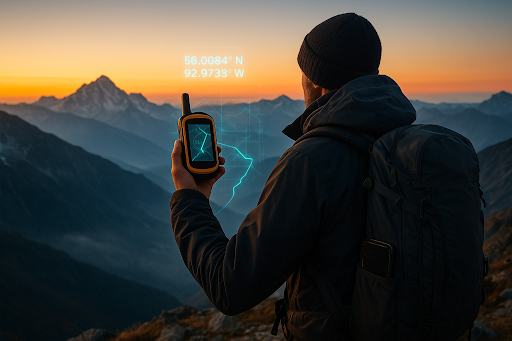
A Global Positioning System (GPS) tracking device is a specialized electronic receiver that determines its precise location (latitude, longitude, and altitude) anywhere on Earth.
How it Works
The operation relies on a direct connection to a global network of orbiting satellites.
- Satellite Connection: The device passively receives radio signals from multiple orbiting GPS satellites (a minimum of four are typically needed for an accurate 3D position).
- Positioning Calculation: The device calculates the distance to each satellite by measuring the time it takes for the signal to arrive. Using a mathematical technique called trilateration (or more accurately, multilateration, especially with modern multi-GNSS systems), the receiver pinpoints its exact location.
- Navigation & Display: This location data is then used to display the position on an internal offline map, calculate speed, track distance traveled, and provide turn-by-turn navigation on trails. Crucially, this entire process operates without the need for an internet or cellular connection, making it indispensable for off-grid navigation.
Why Trekkers Need Dedicated GPS Devices
For hikers, backpackers, and trekkers, a dedicated handheld GPS tracker is the ultimate survival and navigation tool, far surpassing smartphone capabilities.
- Safety in Remote Areas: In areas with zero phone network like high mountain passes, deep canyons, or vast forests a standard mobile phone is useless for communication. Many modern GPS devices include satellite messenger features (e.g., inReach or SPOT) allowing you to send pre-programmed messages and, most importantly, SOS/Emergency location sharing via a global satellite network like Iridium.
- Tracking Routes without Service: Dedicated trackers use more powerful antennas and multiple Global Navigation Satellite Systems (GNSS) like GPS, GLONASS, and Galileo to maintain a consistent, highly accurate fix, regardless of cellular coverage. You can reliably record your entire trek, known as a 'track log.'
- Emergency Location Sharing: The built-in SOS alert feature connects you to a 24/7 staffed emergency response center (like Garmin IERCC), dispatching Search and Rescue (SAR) to your exact coordinates. This single feature is the primary reason why professional guides and solo adventurers rely on these devices.
- Avoiding Wrong Trails: With detailed, pre-loaded offline topographic maps, a GPS allows you to follow pre-planned routes and clearly see if you've strayed onto an incorrect or dangerous path.
- Weather-Resistant Navigation: Handheld GPS units are built to withstand the elements—rain, snow, dust, and shock—ensuring navigation remains functional even when your phone would have failed or broken.
Key Features to Look For
When shopping for the best GPS for trekking, prioritize these critical specifications:
|
Feature |
Importance for Trekkers |
|
Battery Backup |
Essential for multi-day trips; look for long life in both standard and Expedition Mode. |
|
Waterproof & Shockproof Build |
Must be rated to withstand heavy rain (IPX7 or better) and accidental drops (MIL-STD-810). |
|
Satellite Connectivity Type |
Multi-GNSS support (GPS, GLONASS, Galileo) offers better accuracy in challenging terrain. Multi-band technology is the latest for superior precision. |
|
SOS/Emergency Alert Options |
Look for two-way satellite communication for life-saving messaging when off-grid. |
|
Offline Maps |
The ability to pre-load detailed topographical maps (topo maps) that don't require cellular data. |
|
Accuracy Level |
Modern multi-band devices can achieve sub-meter accuracy, which is vital in dense bush or canyons. |
|
Portability & Weight |
A compact design that is easy to carry and access, often with a lanyard or carabiner clip. |
|
Real-time Coordinates |
Allows you to quickly relay your precise latitude and longitude if reporting an emergency via radio or other means. |
Best Applications of GPS Devices for Trekking
Modern outdoor GPS devices are far more than simple location trackers. They provide advanced tools that elevate both the safety and experience of your trek.
- Route Navigation: Following a pre-set GPX file (a standard file format for GPS data) to navigate complex trail systems or off-trail cross-country routes.
- Distance & Altitude Tracking (ABC Sensors): Utilizing the built-in Altimeter, Barometer, and Compass (ABC sensors), the device provides highly accurate elevation gain/loss, barometric pressure trends (for short-term weather forecasting), and magnetic direction.
- Finding Campsites & Waypoints: Trekkers can drop waypoints at water sources, ideal camping spots, or landmarks, making it easy to return to them later.
- Sharing Live Location with Team: Devices with live tracking or satellite messaging allow you to send your position to family, friends, or team members back home, providing peace of mind and accountability.
- Wildlife or Restricted-Area Alerts: You can load geo-fences or map layers that alert you when you are approaching protected zones or sensitive wildlife habitats.
- Mapping New Trails: Advanced users and explorers can record a track log of their journey to create new, verifiable GPX routes that can be shared with the hiking community or official mapping organizations.
Top GPS Devices Available on Our Website
Ensure your next adventure is safe and successful with one of these top-rated trekking GPS devices available right now on our site.
| Product | Price (₹) | Main Features |
|
₹28,500 |
A classic, entry-level model with a sunlight-readable color display, 3-axis compass, and barometric altimeter. Supports both GPS and GLONASS for reliable tracking. Excellent battery conservation on standard AA batteries. Ideal beginner GPS. |
|
|
₹32,500 |
An upgrade to the 30x, featuring 8GB of internal memory and a microSD card slot for expandable storage of offline topo maps. Adds more advanced mapping and a rugged, IPX7 waterproof design. A top choice for reliable off-grid navigation. |
|
|
₹55,500 |
A premium, feature-rich multi-band GNSS device offering superior accuracy even in deep canyons and dense tree cover. Includes a 3-axis compass, barometric altimeter, and preloaded TopoActive maps. Built for the most challenging terrain. |
Buying Guide for Beginners
Choosing your first outdoor GPS doesn't have to be complicated. Here is a straightforward guide to making the right choice.
How to Choose Based on Budget
- Budget-Friendly (Below ₹35,000): Focus on essential navigation. Devices like the Garmin eTrex series provide core GPS/GLONASS tracking, basic wayfinding, and long battery life using easily replaceable AA batteries. They are an excellent beginner GPS for reliable backups.
- Mid-Range (₹35,000 – ₹60,000): Look for added features like Multi-band GNSS (for better accuracy), larger screens, preloaded maps, and internal rechargeable batteries. The Garmin GPSMAP series is a top choice here for frequent, serious trekkers.
- Premium/Expedition (Above ₹60,000): This tier includes a built-in Satellite Messenger (e.g., Garmin inReach technology), which is crucial for solo expeditions or travel in areas with high-risk exposure, as it adds the life-saving SOS alert feature. Note: Satellite messengers require a separate service subscription.
Choosing a Device Based on Trekking Terrain
- Open Terrain (Deserts, Prairies): A basic GPS with a strong battery life is often sufficient, as satellite reception is generally excellent. Lightweight GPS models are preferable.
- Challenging Terrain (Dense Forests, Canyons): You need a device with Multi-band GNSS technology to overcome signal obstruction from trees and rock faces. Look for a model with a fast processor and high-resolution display for map clarity.
When to Pick Light-Weight vs. Rugged GPS
The trade-off is often between screen size, battery capacity, and portability.
- Light-Weight: Opt for a smaller, lighter model (like a pocket-sized satellite messenger) if every gram counts, such as for trail running or multi-day fastpacking.
- Rugged: Choose a heavier, highly shockproof handheld with a large screen and buttons if you plan on trekking in extreme cold (where gloves are required) or harsh, wet conditions where the device will be exposed and potentially dropped.
Battery Conservation Tips
Maximizing the life of your long battery life GPS is vital:
- Reduce Track Intervals: Change the track recording interval from every 1 minute to every 5 or 10 minutes. This greatly reduces the device's power drain.
- Use Expedition Mode: Many advanced devices feature a low-power Expedition Mode that dramatically extends battery life by taking position fixes less frequently.
- Turn Off Backlight: Minimize the use of the screen's backlight, as it's a major battery consumer. Rely on the sunlight-readable screen as much as possible.
- Disable Unused Sensors: Turn off features you don't need, such as Bluetooth, ANT+ connectivity, or Wi-Fi.
FAQs
Are GPS devices better than mobile phones for trekking?
Yes, unequivocally. Dedicated handheld GPS trackers are vastly superior for serious trekking. They offer uninterruptible satellite connection without relying on cellular towers, feature a longer battery life (often days or weeks vs. hours for a phone), are built with rugged, waterproof materials, and most importantly, can include SOS alert satellite messaging for true emergency communication where a phone has no signal.
How accurate are handheld GPS trackers?
Modern, high-quality handheld GPS trackers are extremely accurate. Devices featuring multi-band GNSS (which use multiple radio frequencies from satellites like GPS, GLONASS, and Galileo simultaneously) can achieve positional accuracy down to 5 meters or less, sometimes even sub-meter precision in optimal conditions. This high accuracy GPS is essential for locating small landmarks, caches, or safety points in dense environments.
Can GPS work without internet?
Absolutely, yes. The core functionality of a GPS device—determining your position—relies entirely on receiving signals from orbiting satellites. This process requires zero internet or cellular connection. As long as you have the offline maps pre-loaded onto your device, you can navigate and track your location anywhere in the world, including the most remote locations.
Which GPS is best for beginners?
The Garmin eTrex series is often cited as the best GPS for beginners. They are affordable, straightforward to operate with a simple button interface, run on standard AA batteries, and provide all the core features needed for safe and effective route navigation and tracking, without the complexity of advanced satellite communication features.
Conclusion
In 2025, the technology powering GPS tracking devices has never been more accurate, durable, or life-saving. For any trekker venturing into the backcountry, a dedicated GPS is the cornerstone of a comprehensive safety and navigation strategy. It is the one piece of gear built to fail-safe, ensuring that your adventure remains safe and you can find your way, no matter how far off the grid you roam.
To explore high-quality GPS devices you can visit SciSpectrum, a trusted supplier offering reliable instruments for fieldwork and outdoor expeditions: https://scispectrum.in/