
Posted by scispectrum on 11th Mar 2026
What is a Multiparameter Water Quality Meter? Benefits, Features, and Applications
Table of Contents
- Introduction
- What is a Multiparameter Water Quality Meter?
- Key Parameters Measured by Multiparameter Meters
- Key Features of Multiparameter Water Quality Meters
- Benefits of Using a Multiparameter Water Quality Meter
- Applications of Multiparameter Water Quality Meters
- How to Choose the Right Multiparameter Meter
- Conclusion
Introduction
Water quality testing is essential for environmental protection, industrial processes, public health, and scientific research. Laboratories, environmental agencies, and water treatment facilities regularly analyze water samples to ensure that they meet safety and regulatory standards.
Traditionally, measuring multiple water parameters required several different instruments. However, modern technology has made this process much easier with the introduction of multiparameter water quality meters.
These advanced devices allow users to measure several water quality parameters simultaneously using a single instrument. This improves efficiency, reduces testing time, and ensures accurate monitoring of water conditions.
In this guide, we will explain what a multiparameter water quality meter is, the parameters it measures, its key benefits, and its applications in various industries.
What is a Multiparameter Water Quality Meter?
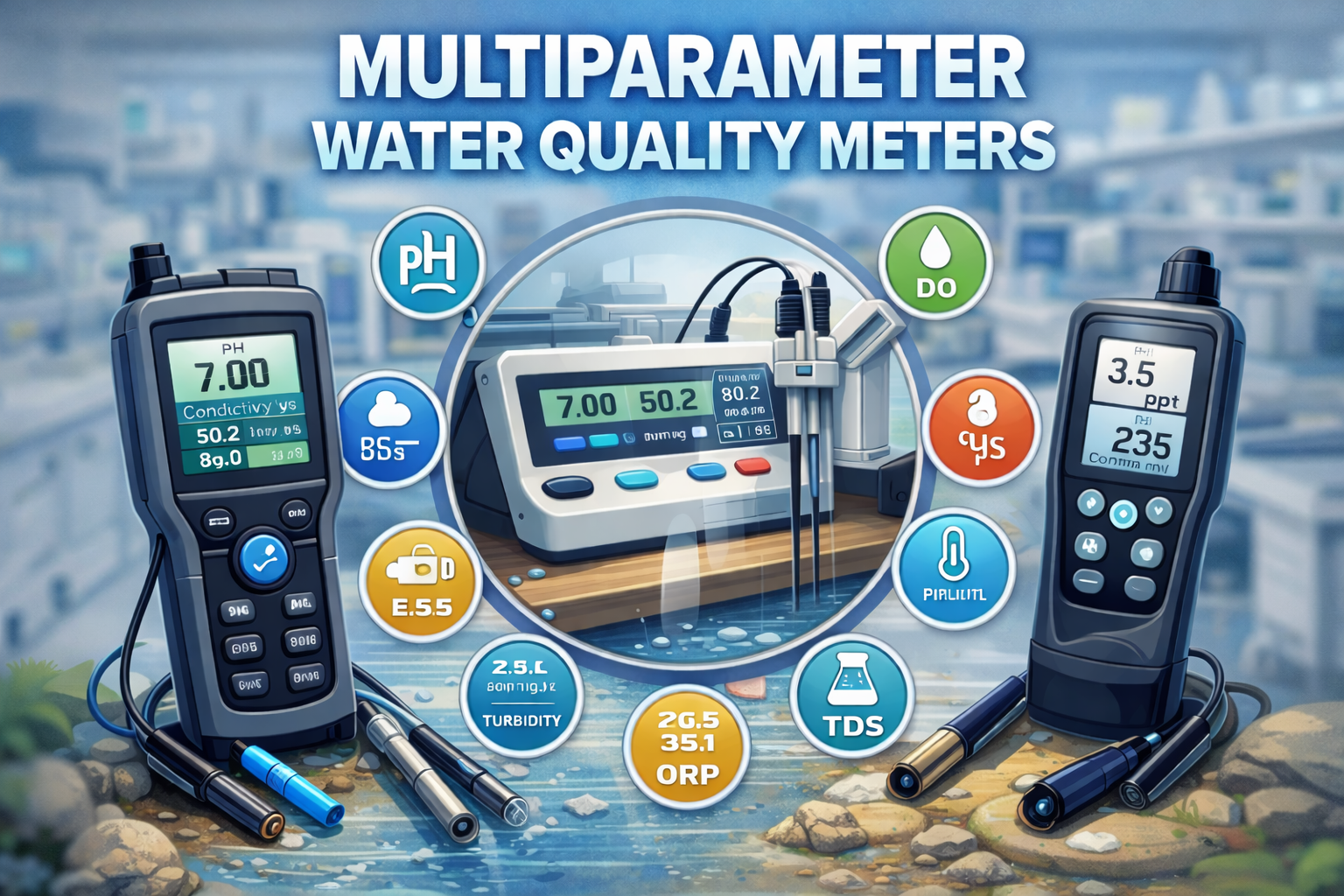
A multiparameter water quality meter is a laboratory or portable instrument designed to measure multiple water quality parameters at the same time. Instead of using separate devices for each parameter, a single multiparameter meter can analyze several factors that determine water quality.
These meters typically use multiple sensors or probes connected to a central device. Each probe measures a specific parameter, and the instrument displays the results in real time.
Multiparameter meters are available in both portable models for field testing and benchtop versions for laboratory analysis.
They are widely used by environmental scientists, laboratory technicians, and water treatment professionals who need reliable and efficient water testing solutions.
Key Parameters Measured by Multiparameter Meters
Multiparameter water quality meters can measure a variety of important parameters depending on the model and sensors used.
pH
pH measures the acidity or alkalinity of water. It is one of the most important indicators of water quality and is commonly tested in environmental, industrial, and laboratory applications.
Conductivity
Conductivity measures the ability of water to conduct electricity, which indicates the presence of dissolved salts and minerals. It is widely used to evaluate water purity and salinity.
Dissolved Oxygen (DO)
Dissolved oxygen refers to the amount of oxygen present in water. This parameter is critical for aquatic life and is frequently monitored in environmental studies and wastewater treatment plants.
Temperature
Temperature affects many chemical and biological processes in water. Accurate temperature measurement is essential for reliable water quality analysis.
Turbidity
Turbidity measures the cloudiness or clarity of water caused by suspended particles. It is commonly tested in drinking water treatment and environmental monitoring.
Some advanced multiparameter meters can also measure additional parameters such as Total Dissolved Solids (TDS), salinity, and oxidation-reduction potential (ORP).
Key Features of Multiparameter Water Quality Meters
Multiparameter meters include several advanced features that make water testing faster and more efficient.
Multiple Sensor Capability
These instruments can connect to several probes simultaneously, allowing multiple parameters to be measured in a single test.
Digital Display
Most multiparameter meters have a clear digital display that shows real-time readings for each parameter.
Data Storage
Many modern meters include internal memory that allows users to store test results for later analysis or reporting.
Portable Design
Portable multiparameter meters are designed for fieldwork and environmental testing, allowing measurements to be taken directly at sampling locations.
Calibration Functions
Accurate calibration options help ensure reliable and consistent measurement results.
Benefits of Using a Multiparameter Water Quality Meter
Multiparameter meters offer several advantages compared to using separate instruments for each parameter.
Time Efficiency
Testing multiple parameters with a single device saves time and simplifies the testing process.
Improved Accuracy
Using integrated sensors ensures consistent measurements and reduces potential errors caused by using different instruments.
Cost Savings
Purchasing one multiparameter instrument can be more cost-effective than buying several separate testing devices.
Convenience in Field Testing
Portable multiparameter meters allow technicians to perform water quality analysis directly at the sampling location.
Simplified Data Management
Many instruments allow users to store and export data, making it easier to maintain records and generate reports.
Applications of Multiparameter Water Quality Meters
Multiparameter water quality meters are used in many industries and scientific fields.
Environmental Monitoring
Environmental scientists use these meters to analyze water quality in rivers, lakes, and oceans.
Water Treatment Plants
Water treatment facilities monitor multiple parameters to ensure drinking water meets safety standards.
Wastewater Management
Wastewater treatment plants use multiparameter meters to track water quality during treatment processes.
Research Laboratories
Laboratories studying environmental science, chemistry, and biology use multiparameter meters for detailed water analysis.
Aquaculture
Fish farms and aquaculture facilities monitor water parameters such as dissolved oxygen, pH, and temperature to maintain healthy aquatic environments.
How to Choose the Right Multiparameter Meter
Selecting the right multiparameter water quality meter depends on your specific testing requirements.
Consider the following factors:
Number of Parameters
Choose an instrument that measures all the parameters required for your application.
Accuracy and Calibration
Ensure the meter provides reliable accuracy and supports proper calibration procedures.
Portability
Field testing applications may require a lightweight and portable instrument.
Data Logging Features
Some meters allow users to store and export test data for documentation and analysis.
Durability
For outdoor or industrial environments, choose a meter designed to withstand challenging conditions.
Laboratories and environmental professionals can explore reliable water quality testing equipment and multiparameter meters available from Scispectrum Lab Essentials.
| Product | Brand | Parameters Measured | Type | Price (Excl. GST) |
|---|---|---|---|---|
| HANNA HI2020-02 Multiparameter pH Meter | HANNA | pH, mV, Temperature (Expandable to EC, TDS, Salinity, DO) | Benchtop / Portable | ₹56,250 |
| Eutech PC 700 Multiparameter Meter | EUTECH | pH, ORP, Conductivity, TDS, Temperature | Benchtop | ₹92,500 |
| AQUASOL AMAL01 Multi-Parameter Meter Pro | AQUASOL | pH, ORP, Conductivity, TDS, Salt, Temperature | Portable | ₹21,500 |
| Eutech PC 450 Portable Multiparameter Meter Kit | EUTECH | pH, mV, Conductivity, TDS, Salinity, Temperature | Portable | ₹107,500 |
| HM COM-360 Water Quality Meter | HM Digital | pH, EC, TDS, Temperature | Handheld | ₹12,500 |
Conclusion
Multiparameter water quality meters are powerful tools that simplify water analysis by measuring multiple parameters with a single device. These instruments improve testing efficiency, provide accurate measurements, and make water monitoring more convenient for laboratories and field technicians.
From environmental monitoring to industrial water treatment, multiparameter meters play an important role in maintaining water quality and protecting ecosystems.
By selecting the right multiparameter meter based on your testing requirements, laboratories and environmental professionals can ensure accurate water quality analysis and reliable results.
To explore a range of water quality testing instruments, laboratories can visit Scispectrum Lab Essentials, which offers professional laboratory equipment designed for research, environmental monitoring, and industrial testing.