
Posted by scispectrum on 11th Mar 2026
Spectrophotometer: Principle, Types, Uses & Price in India
Spectrophotometer: Working Principle, Types, Uses & Price in India
A pharma QC analyst once described her first week working with a UV spectrophotometer as "the moment I understood why chemistry is beautiful." She was quantifying an API using its UV absorbance spectrum — a method specified in the Indian Pharmacopoeia — and realised the instrument was essentially reading molecular identity. Every compound absorbs light differently, at different wavelengths, in a pattern as unique as a fingerprint.
That is precisely what makes the spectrophotometer one of the most fundamental instruments in analytical science. From assaying pharmaceutical active ingredients to measuring water turbidity and food colour, no other instrument matches its combination of versatility, precision, and speed for quantitative analysis. This guide covers everything you need to understand spectrophotometers — how they work, which type fits your application, and what models are available in India with actual prices.
Spectrophotometer: An analytical instrument that measures the intensity of light absorbed or transmitted by a substance at a specific wavelength, used to determine the concentration of that substance in solution. It operates on the Beer-Lambert Law, which relates absorbance to concentration. Spectrophotometers measure across wavelength ranges from ultraviolet (190 nm) through visible (400–700 nm) to near-infrared (1100 nm), depending on the instrument type.
What Is a Spectrophotometer
At its core, a spectrophotometer answers one question: how much light does this sample absorb at this wavelength? The answer tells you the concentration of the absorbing substance — whether that is an API in a tablet dissolution sample, nitrate in a water sample, or haemoglobin in blood.
The instrument does this by shining a light beam of a specific, controlled wavelength through the sample and measuring how much of that light reaches the detector on the other side. The more concentrated the absorbing substance, the less light gets through, and the higher the absorbance reading.
What distinguishes a spectrophotometer from a simpler light-measuring device is the monochromator — the component that isolates a narrow, precise wavelength from the broad spectrum of the light source. This is what gives spectrophotometers their analytical power: you can choose exactly the wavelength at which your analyte absorbs most strongly, maximising sensitivity and minimising interference from other substances in the sample.
Working Principle: Beer-Lambert Law Explained
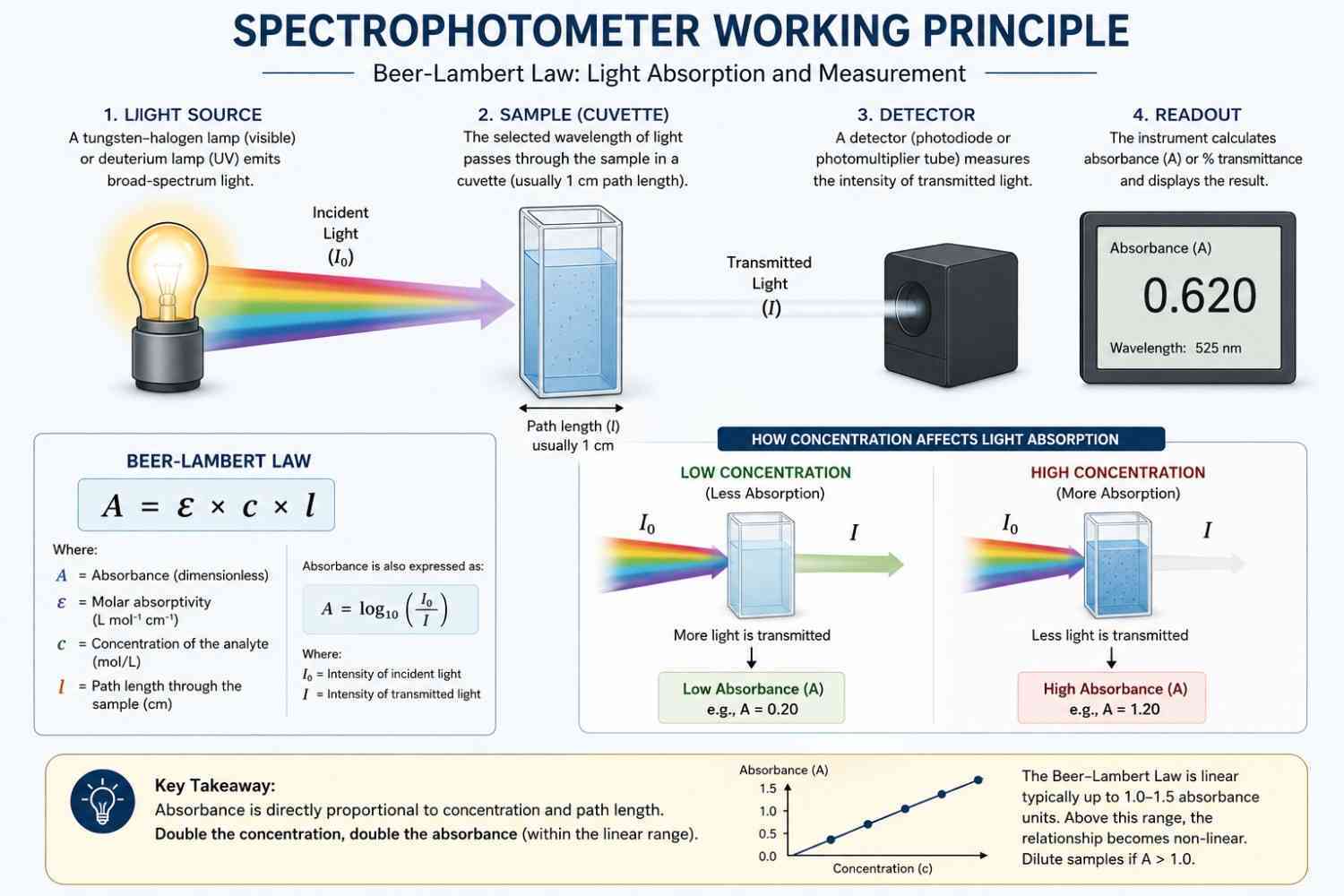
The working principle of a spectrophotometer is founded on the Beer-Lambert Law (also written as the Beer-Lambert-Bouguer Law), which states:
A = ε × c × l
Where: A = Absorbance (dimensionless) | ε = Molar absorptivity (L mol⁻¹ cm⁻¹) | c = Concentration of the analyte (mol/L) | l = Path length through the sample (cm, usually 1 cm cuvette)
Absorbance is also expressed as: A = log₁₀ (I₀ / I), where I₀ is the intensity of incident light and I is the intensity of transmitted light.
In practical terms: double the concentration of your analyte and you double the absorbance. This linear relationship is what makes spectrophotometry such a reliable quantitative method — you build a calibration curve using standards of known concentration, measure the absorbance of your unknown sample, and read off the concentration directly from the curve.
How the measurement works — step by step
- Light source — a tungsten halogen lamp (visible range, 340–900 nm) or deuterium lamp (UV range, 190–400 nm) emits broad-spectrum light.
- Monochromator — a diffraction grating or prism disperses the light and an exit slit selects a narrow wavelength band (typically 2–5 nm bandwidth).
- Sample compartment — the selected wavelength passes through the sample, held in a cuvette (usually 1 cm path length, glass or quartz).
- Detector — a photodiode or photomultiplier tube measures the intensity of the transmitted light.
- Signal processor — the instrument calculates absorbance (A) or transmittance (T%) from the ratio of sample intensity to blank intensity and displays the result.
Key Components of a Spectrophotometer
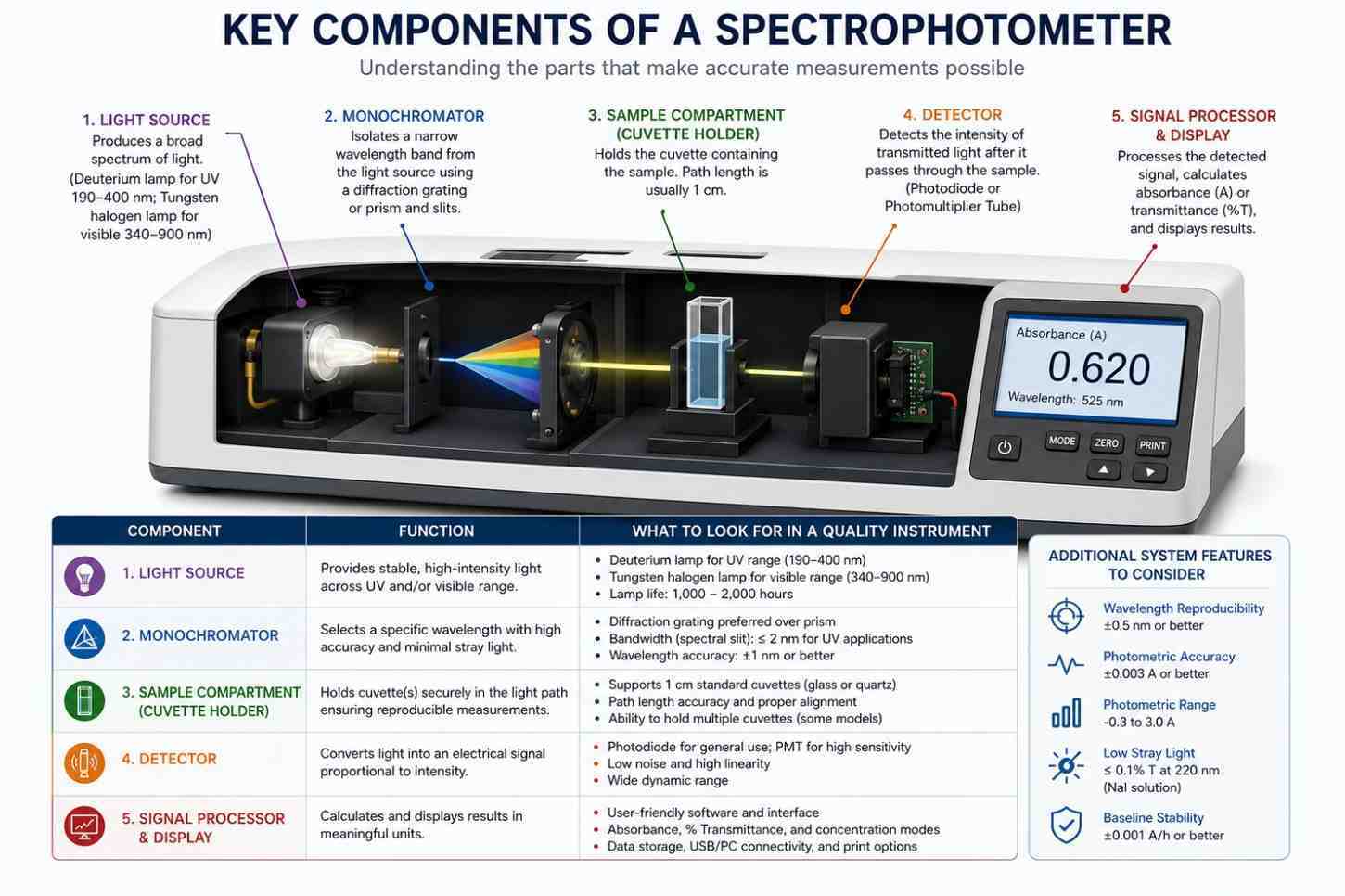
Understanding the components helps you evaluate instrument quality and diagnose problems when measurements go wrong.
| Component | Function | What Quality Looks Like |
|---|---|---|
| Light source | Produces the incident light beam | Tungsten-halogen for visible; deuterium + tungsten for UV-Vis. Lamp life 1,000–2,000 hours |
| Monochromator | Isolates a narrow wavelength band | Diffraction grating preferred over prism — more linear dispersion. Bandwidth ≤2 nm for UV work |
| Sample compartment | Holds the cuvette during measurement | Thermostated cell holder for temperature-sensitive samples; accepts 10 mm standard cuvettes |
| Cuvette | Contains the sample or blank | Glass for visible range; quartz for UV. Path length: 1 cm standard |
| Detector | Measures transmitted light intensity | Silicon photodiode (visible); photomultiplier tube (PMT) for high sensitivity UV work |
| Signal processor | Calculates absorbance / transmittance | Microprocessor with RS-232/USB output; stores calibration curves and results |
Types of Spectrophotometers
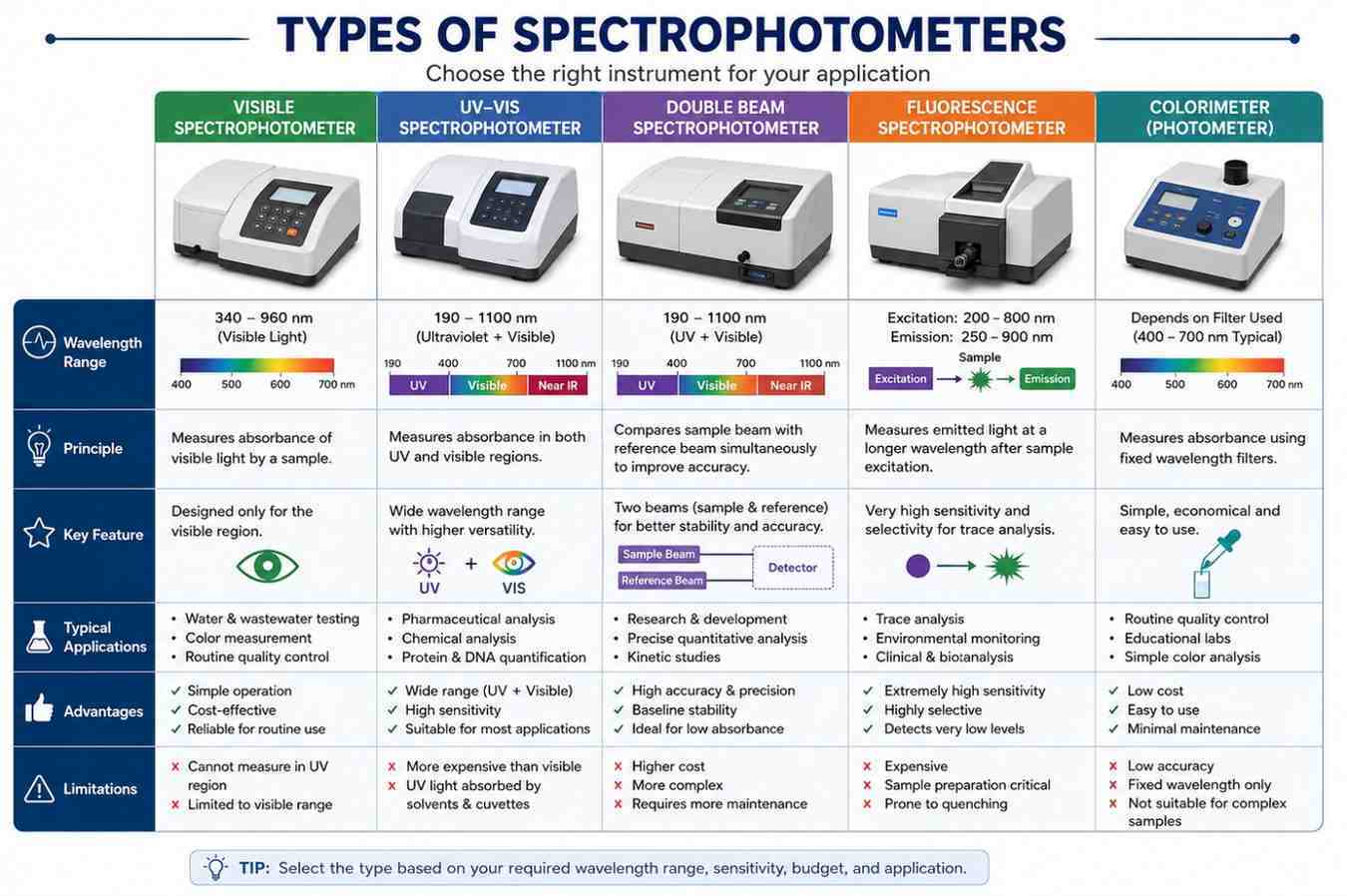
The spectrophotometer family spans a wide range of instruments. Understanding the distinctions is essential before any purchasing decision — the wrong type for your application is an expensive mistake in any direction.
1. Visible Spectrophotometer (340–960 nm)
Operates only in the visible light range. Uses a tungsten-halogen lamp and glass optics. Suitable for any application where the analyte produces a coloured reaction that absorbs in the visible spectrum — BOD analysis, COD, water quality parameters (phosphate, nitrate, ammonia via Nessler reagent), food colour measurement, and clinical chemistry tests.
The most cost-effective entry point into spectrophotometry — instruments start at ₹37,800 for a single-beam microprocessor model (SKY 721) and go up to ₹89,900 for a full-featured microprocessor instrument with software (EI 2306). Cannot measure samples that absorb only in the UV range (DNA, proteins, many pharmaceutical APIs).
2. UV-Vis Spectrophotometer (190–1100 nm)
Extends the measurement range into the ultraviolet by adding a deuterium lamp alongside the tungsten-halogen source, and using quartz optics throughout. This is the standard instrument for pharmaceutical API assay and identification per IP and USP monographs, DNA/protein quantification in biotech, and aromatic compound analysis in environmental chemistry.
The deuterium lamp and quartz optical system add significantly to the cost — UV-Vis single beam instruments start from ₹1,25,000 (EI-DVI Model 3371, 200–1000 nm range, 5 nm bandwidth). For labs that need both UV and visible capability, this is the minimum investment.
3. Double Beam Spectrophotometer
In a double beam design, a beam splitter divides the light into two identical paths — one through the sample cuvette and one through the reference (blank) cuvette — simultaneously. Both are measured at the same time by separate detectors, and the instrument computes the ratio. This eliminates errors caused by lamp intensity fluctuations, drift, and environmental instability that affect single-beam instruments.
Double beam instruments are the preferred choice for research applications, scanning full absorption spectra (200–900 nm continuous scan), pharmaceutical method development, and any application where long measurement sessions or high precision is required. Prices in India start at ₹3,10,600 for the SKY 2702 double beam UV-Vis with Bluetooth connectivity, up to ₹4,30,900 for the SKY 2800 variable bandwidth model.
4. Fluorescence Spectrophotometer (Spectrofluorometer)
Measures the fluorescence emission of a sample rather than its absorption. The sample is excited at one wavelength (excitation wavelength) and the emitted fluorescence is measured at a longer wavelength (emission wavelength). Fluorescence detection is 100–1,000 times more sensitive than absorbance — it can detect analytes at concentrations far below the detection limits of UV-Vis instruments.
Used in pharmaceutical labs for trace-level impurity analysis, vitamin analysis, and fluorescence-labelled assays; in environmental labs for PAH (polycyclic aromatic hydrocarbon) detection; and in research for cellular imaging and FRET studies. The SKY 286 digital photo fluorometer (₹44,000) and EI 681 (₹78,500) cover routine fluorometric analysis; the SKY 4000 and 4100 scanning fluorescence spectrophotometers (₹7,09,900–₹8,08,700) are full research-grade instruments.
5. Colorimeter
A colorimeter is a simplified spectrophotometric instrument that uses fixed glass filters instead of a monochromator to isolate broad wavelength bands. It measures absorbance at one or several preset wavelengths determined by the filter selection. Colorimeters are purpose-built for routine quantitative tests where the wavelength is fixed and known — water quality analysis, food and beverage QC, soil testing, and clinical chemistry.
They are significantly less expensive and simpler to operate than spectrophotometers. The EI ALPHA03 digital photo colorimeter (₹7,450) and EI 1311 (₹11,900) are widely used in Indian water testing labs and educational institutions. They cannot generate absorption spectra and are not suitable for method development.
| Type | Wavelength Range | Best For | Relative Cost | India Price Range (excl. GST) |
|---|---|---|---|---|
| Colorimeter | Visible (fixed filters) | Routine water QC, BOD, food testing | Entry | ₹5,000 – ₹16,900 |
| Visible Spectrophotometer | 340–960 nm | Environmental, food, clinical labs | Low–Mid | ₹37,800 – ₹89,900 |
| UV-Vis Single Beam | 190–1100 nm | Pharma assay, DNA/protein, research | Mid | ₹1,25,000 – ₹2,44,000 |
| UV-Vis Double Beam | 190–1100 nm | Research, pharma method development, scanning | High | ₹3,10,600 – ₹4,30,900 |
| Fluorescence | 200–900 nm (Ex/Em) | Trace analysis, pharma, biotech research | High–Premium | ₹44,000 – ₹8,08,700 |
Single Beam vs Double Beam: Which Do You Need
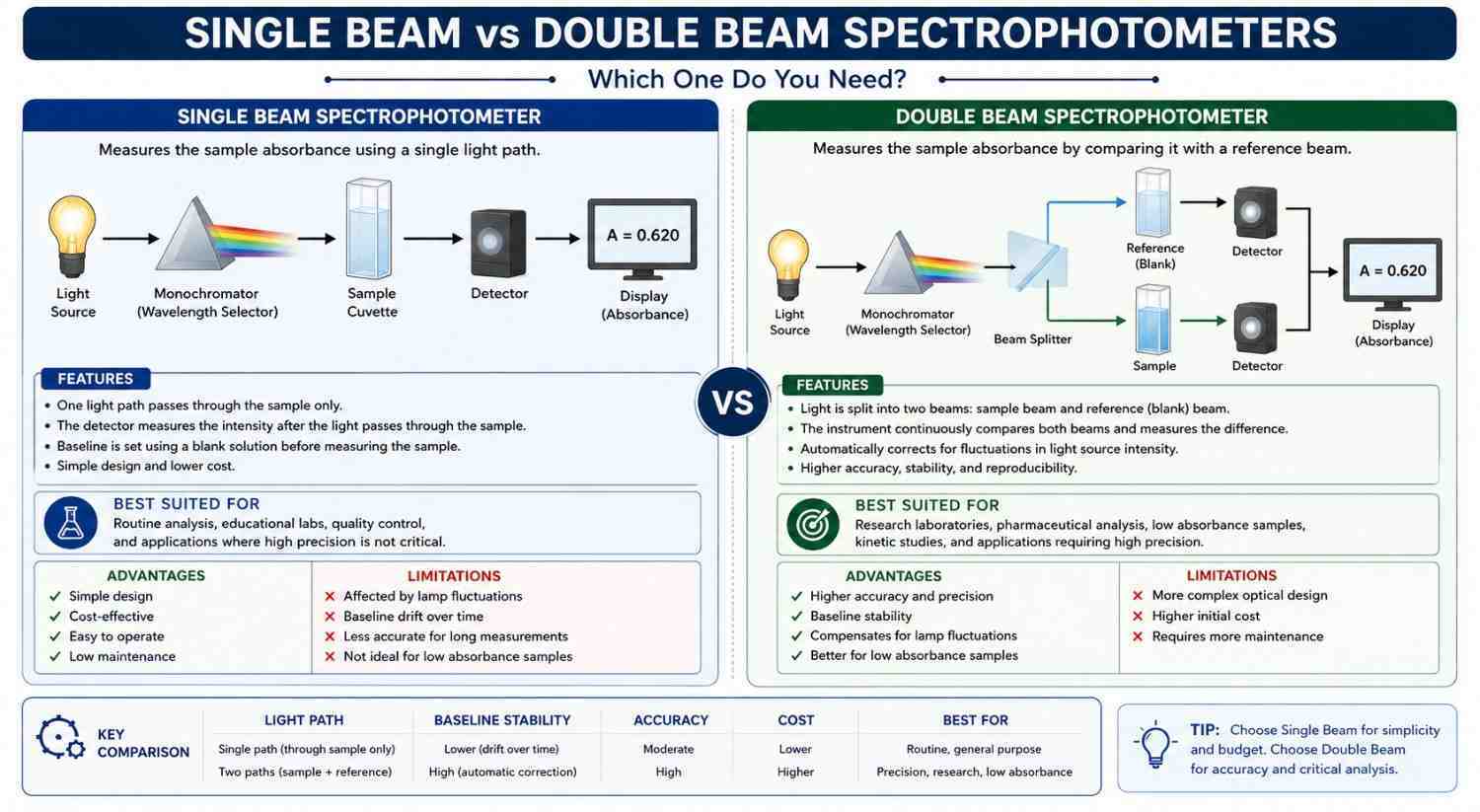
This is the question most buyers in India struggle with. The price difference is significant — roughly 2.5× to 3× for a comparable double beam instrument. Whether that premium is justified depends entirely on your application.
Choose a single beam instrument when:
- You are doing routine quantitative analysis at a fixed wavelength — measuring absorbance of coloured reaction products, running standard curves, checking compliance against a specification
- Measurement sessions are short — you measure blanks and samples in sequence within a few minutes, so lamp drift is not a significant factor
- Your application does not require scanning full absorption spectra
- Budget is the primary constraint and ±0.002–0.005 A photometric accuracy is acceptable
Choose a double beam instrument when:
- You need to scan full absorption spectra (200–900 nm) — required for identification testing in pharmacopoeial methods (IP, USP, BP)
- Long measurement sessions with many samples — lamp drift affects single beam readings significantly over time
- Higher photometric accuracy is required (±0.001–0.002 A)
- Method development or research work — you need reproducible baseline and spectral comparison
- The lab will be preparing for NABL accreditation, WHO-GMP, or USFDA audit — auditors will check instrument qualification and suitability for method
Spectrophotometer vs Colorimeter: Key Differences
In Indian labs the terms are sometimes used interchangeably — incorrectly. Understanding the difference prevents purchasing the wrong instrument and, more importantly, generating data that cannot be validated against pharmacopoeial or standard methods.
| Feature | Spectrophotometer | Colorimeter |
|---|---|---|
| Wavelength selection | Monochromator — any wavelength, continuously variable | Fixed glass filters — preset wavelengths only |
| Bandwidth | Narrow (2–8 nm) | Wide (30–100 nm) |
| Spectral scanning | Yes — full spectrum 190–1100 nm | No |
| Method flexibility | High — any wavelength, any analyte | Low — limited to filter set |
| Accuracy | Higher (±0.001–0.005 A) | Lower (±0.01–0.02 A) |
| Typical use | Pharma assay, research, method development | Water QC, BOD, routine fixed-parameter testing |
| IP/USP suitability | Yes — specified instrument for compendial assays | No — not accepted for pharmacopoeial assay |
| Price range (India) | ₹37,800 – ₹4,30,900+ | ₹5,000 – ₹86,900 |
Applications: Where Spectrophotometers Are Used in India
No other single analytical instrument appears in as many different types of Indian laboratories as the spectrophotometer. Here are the primary application domains:
Pharmaceutical QC and R&D
Spectrophotometry is one of the three fundamental methods in pharmacopoeial analysis alongside HPLC and titrimetry. IP and USP specify UV spectrophotometry for the assay and identification of hundreds of monographed substances — analgesics, antibiotics, vitamins, steroids, and their formulations. UV-Vis double beam instruments are the standard for pharmaceutical method development labs. Single beam UV-Vis instruments are widely used in QC for routine assay where the method is already established.
Environmental and Water Testing
CPCB and NABL-accredited environmental testing laboratories use visible spectrophotometers for measuring water quality parameters: BOD (biochemical oxygen demand) via the Winkler method or photometric modification, COD colour measurement, turbidity (when a spectrophotometer is used as a surrogate), phosphate, nitrate, nitrite, ammonia, and heavy metals after colour-forming digestion. A visible spectrophotometer (340–960 nm) is the standard instrument for these applications and is far more cost-effective than a full UV-Vis system.
Food and Beverage Quality Control
FSSAI-registered food testing labs use spectrophotometers for colour measurement of oils and fats, Brix and sugar content in beverages, preservative detection, vitamin C content via UV absorbance, and adulteration screening. Both visible spectrophotometers and colorimeters are used depending on the specific FSSAI method and the wavelength required.
Biochemistry and Life Sciences Research
UV absorbance at 260 nm is the standard method for quantifying DNA and RNA in biotech labs. The A260/A280 ratio indicates protein contamination. Protein quantification via Bradford, BCA, or Lowry assays all require a spectrophotometer at 595 nm or 562 nm. Enzyme kinetics, cell growth monitoring (OD600), and ELISA plate readers are all spectrophotometric applications. IITs, IISc, and research institutes across India use UV-Vis double beam instruments as their primary analytical workhorse.
Clinical and Diagnostic Laboratories
Semi-automated clinical chemistry analysers are essentially purpose-built spectrophotometers measuring haemoglobin, bilirubin, glucose, creatinine, uric acid, and liver enzymes in serum samples via colourimetric reactions. Standalone photo colorimeters and visible spectrophotometers are used in smaller diagnostic labs for manual clinical chemistry tests.
| Application | Instrument Type | Key Indian Standard/Method |
|---|---|---|
| Pharma API assay & identification | UV-Vis single or double beam | IP / USP spectrophotometry chapters |
| Dissolution testing (UV method) | UV-Vis (often fibre optic online) | IP Appendix XII / USP <711> |
| Water quality — BOD, COD, nutrients | Visible or colorimeter | IS 3025 series / APHA methods |
| Food colour, vitamins, adulteration | Visible spectrophotometer | FSSAI methods |
| DNA/RNA quantification | UV-Vis (A260/A280) | Standard molecular biology protocols |
| Protein quantification | Visible (595 nm / 562 nm) | Bradford / BCA / Lowry methods |
| Fluorescent analytes, trace impurities | Fluorescence spectrophotometer | IP fluorimetry methods, EPA methods |
| Clinical chemistry (haemoglobin, glucose) | Colorimeter or visible spectrophotometer | ICMR / clinical biochemistry methods |
Buying Guide: What to Evaluate Before You Purchase
Once you have identified your instrument type, evaluate these specifications before comparing models:
Wavelength range and accuracy
Verify the stated wavelength range covers your application. UV-Vis range should reach at least 200 nm — many lower-cost "UV-Vis" instruments only reach 220 nm or 260 nm, which is insufficient for full pharmacopoeial UV scanning. Wavelength accuracy should be ±0.5–1.0 nm; wavelength reproducibility ±0.3 nm or better.
Spectral bandwidth
Bandwidth (slit width) determines selectivity. A 1–2 nm bandwidth allows more specific measurements in closely spaced absorption peaks. Most routine instruments offer 2–4 nm fixed bandwidth; better instruments offer variable bandwidth from 0.5 to 5 nm. For IP/USP pharmacopoeial scanning, a 2 nm bandwidth is the standard specification.
Photometric range and accuracy
Photometric range should cover 0–3 absorbance units (0–100% transmittance). Photometric accuracy should be ±0.002–0.005 A for routine QC; ±0.001 A for research grade. Stray light specification — the amount of light reaching the detector at wavelengths other than the selected one — should be below 0.05% T for UV work.
Data output and software
For pharmaceutical labs, RS-232 or USB output for connecting to a PC is essential for GLP documentation. Good software should allow calibration curve creation, multi-wavelength measurement, spectral scanning and overlay, peak detection, and data export. For NABL accreditation, instrument qualification records (IQ/OQ) and software validation documentation from the manufacturer is required.
Cuvette compatibility
Standard 10 mm path length cuvettes are universal. Confirm the sample compartment accepts both glass (visible range) and quartz (UV range) cuvettes. Some instruments also accept micro-volume cuvettes (0.5–1 mL) or flow-through cuvettes for continuous sampling.
Spectrophotometers at Scispectrum: Models and Prices
Scispectrum stocks spectrophotometers and colorimeters from Electronics India (EI-DVI) and SKY — both established Indian and Indian-market brands with service networks across the country. All prices exclude GST; 18% GST is applicable on all instruments.
Colorimeters — Routine Water QC and Fixed-Parameter Testing
Visible Spectrophotometers — 340 to 960 nm
Suitable for environmental water testing, food QC, clinical chemistry, BOD/COD analysis, and educational labs. Cannot measure UV-absorbing compounds.
| Model | Range | Key Feature | Price (₹, excl. GST) |
|---|---|---|---|
| SKY 721 Microprocessor Single Beam | 340–960 nm | Microprocessor, software included | 37,800 |
| EI 301 Digital | 340–960 nm | Digital display, basic QC | 39,900 |
| EI 305 Digital | 340–960 nm | Accurate analysis, rugged build | 44,900 |
| EI 3305 Digital | 340–960 nm | Digital, reliable lab performance | 45,900 |
| EI 304 Digital | 340–960 nm | Precision visible range analysis | 49,500 |
| EI 1305 Microprocessor | 340–960 nm | RS-232 output, microprocessor | 72,500 |
| EI 2306 Microprocessor | 340–960 nm | High precision, full software | 89,900 |
UV-Vis Spectrophotometers — Single Beam (200–1100 nm)
Required for pharmaceutical API assay and identification per IP/USP, DNA/protein quantification, and any application requiring UV range measurement.
| Model | Range | Key Feature | Price (₹, excl. GST) |
|---|---|---|---|
| EI-DVI 3371 Single Beam | 200–1000 nm | 5 nm bandwidth, entry UV-Vis | 1,25,000 |
| EI-DVI 2371 Microprocessor | 200–1000 nm | Microprocessor, software, RS-232 | 1,99,900 |
| EI-DVI 2373 Single Beam Scanning | 190–1100 nm | Scanning capability, full spectrum | 2,44,000 |
UV-Vis Spectrophotometers — Double Beam (190–1100 nm)
For research, pharmaceutical method development, spectral scanning, and applications requiring maximum photometric stability and precision.
| Model | Range | Key Feature | Price (₹, excl. GST) |
|---|---|---|---|
| EI-DVI 3375 Double Beam | 190–1100 nm | Double beam, stable baseline | 3,39,000 |
| SKY 2802R Double Beam Microprocessor | 190–1100 nm | Microprocessor, scanning, software | 3,70,900 |
| SKY 2900 Touch Screen Double Beam | 190–1100 nm | 7-inch touch screen, Bluetooth | 3,99,900 |
| SKY 2800 Variable Bandwidth | 190–1100 nm | Variable bandwidth 0.5–5 nm, research grade | 4,30,200 |
| EI-DVI 2375 Double Beam Scanning | 190–1100 nm | Full scanning, software suite | 4,30,900 |
Frequently Asked Questions
Conclusion
Choosing the right spectrophotometer comes down to three questions: what wavelength range do you need (visible or UV-Vis), how many samples do you run and how much stability matters (single beam vs double beam), and what level of documentation and software capability your compliance requirement demands. A ₹39,900 visible spectrophotometer is exactly right for a water testing lab running BOD and COD daily. A ₹3,39,000 double beam UV-Vis is exactly right for a pharma R&D lab developing and validating IP methods. Neither instrument is better — they are right or wrong for a specific application. Get the match right, and the spectrophotometer will serve your lab reliably for a decade.
Browse spectrophotometers at Scispectrum Call +91 7448882650