
Posted by scispectrum on 6th Mar 2026
Turbidity in Water: What It Means and How Laboratories Measure It (2026 Guide)
Table of Contents
-
Introduction
-
What is Turbidity?
-
Why Turbidity Testing is Important
-
What Causes Turbidity in Water?
-
How Laboratories Measure Turbidity
-
Equipment Used for Turbidity Testing
-
Step-by-Step Turbidity Testing Procedure
-
Factors That Affect Turbidity Measurements
-
Applications of Turbidity Testing
-
Choosing the Right Turbidity Meter for Your Laboratory
-
Conclusion
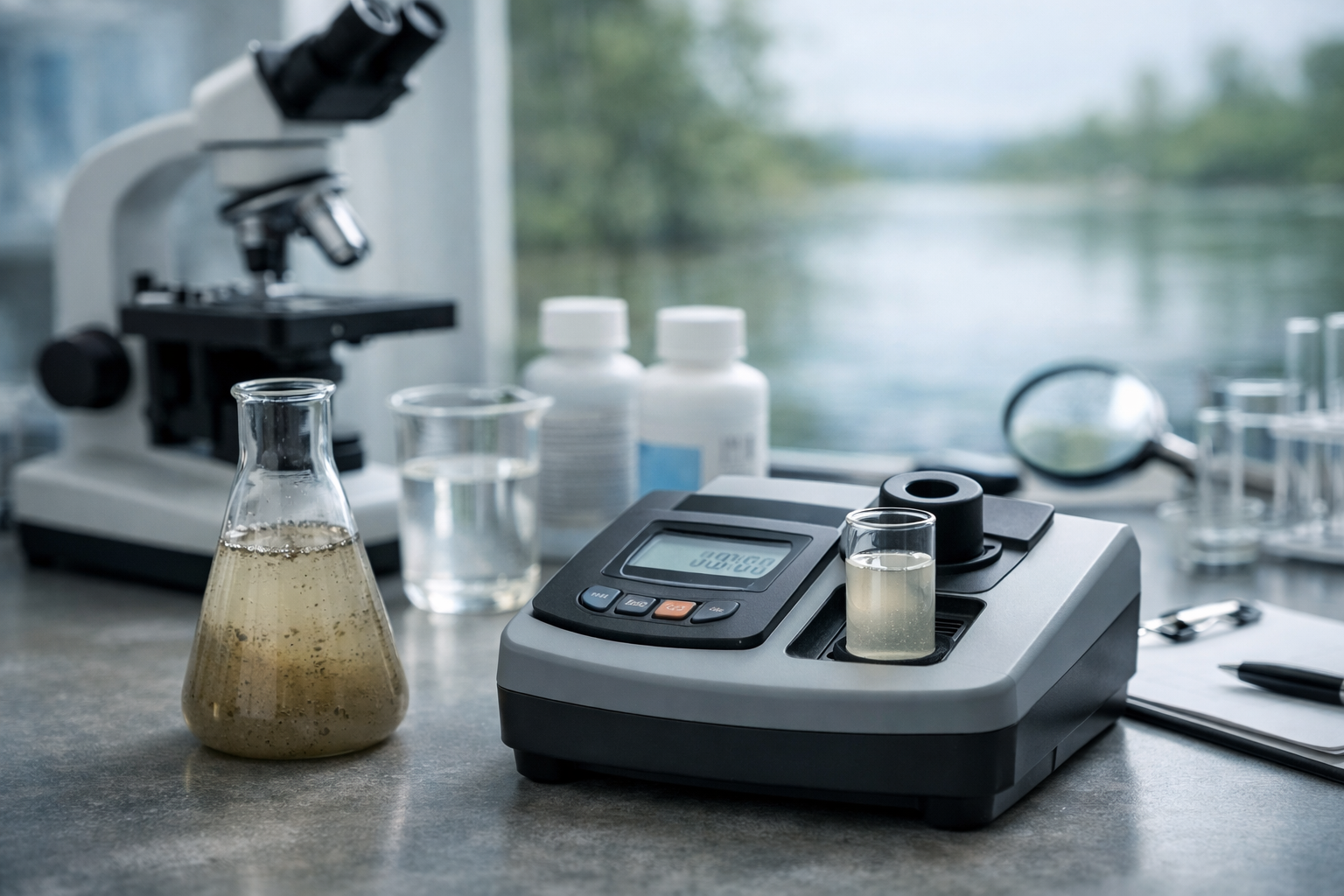
What is Turbidity?
Turbidity refers to the cloudiness or haziness of water caused by suspended particles such as sediment, microorganisms, organic matter, and other fine materials.
These particles scatter light passing through the water, making it appear cloudy or unclear. The higher the concentration of suspended particles, the higher the turbidity level.
Common sources of turbidity include:
- Soil and sediment runoff
- Industrial wastewater discharge
- Algae and microorganisms
- Organic matter decomposition
- Construction and mining activities
Turbidity is commonly measured in NTU (Nephelometric Turbidity Units).
Why Turbidity Testing is Important
Turbidity measurement is essential for several reasons in environmental and laboratory analysis.
1. Drinking Water Safety
High turbidity can indicate the presence of harmful microorganisms or pollutants. Drinking water treatment plants monitor turbidity to ensure safe water supply.
2. Wastewater Monitoring
Industries and wastewater treatment plants measure turbidity to evaluate the efficiency of treatment processes.
3. Environmental Protection
Environmental laboratories test turbidity levels in rivers, lakes, and groundwater to detect pollution and sediment contamination.
4. Filtration Process Monitoring
Turbidity analysis helps water treatment plants determine whether filtration systems are working effectively.
5. Regulatory Compliance
Government agencies and pollution control boards often specify turbidity limits for drinking water and discharged wastewater.
What Causes Turbidity in Water?
Turbidity occurs when small particles remain suspended in water instead of settling down.
These particles may include:
- Clay and silt
- Organic debris
- Bacteria and algae
- Industrial waste particles
- Fine sand and sediment
Natural events such as heavy rainfall, floods, or erosion can increase turbidity in surface water sources. Similarly, industrial discharge and agricultural runoff may significantly raise turbidity levels in water bodies.
| Product Name | Brand | Turbidity Range | Price (Excl. GST) | Type |
|---|---|---|---|---|
| EI-DVI Lab Junction LJ-1335 Microprocessor Turbidity Meter | EI-DVI | 0–1000 NTU/JTU | ₹42,900 | Bench Turbidity Meter |
| EI-DVI Model 1331 Microprocessor Digital Turbidity Meter | EI-DVI | Up to 1000 NTU | ₹34,500 | Microprocessor Turbidity Meter |
| Model 1341 Microprocessor Digital Turbidity Meter | EI-DVI | 0–200 NTU (2 ranges) | ₹27,500 | Digital Nephelometer |
| Electronics India EI 335 Digital Turbidity Meter | EI-DVI | Up to 1000 NTU | ₹25,900 | Digital Turbidity Meter |
| Digital Turbidity Meter Model 331 | EI-DVI | Up to 1000 NTU | ₹16,500 | Digital Turbidity Meter |
| Electronics India Digital Nephelometer Model 341 | EI-DVI | Not specified | ₹11,900 | Nephelometer Turbidity Meter |
| Lutron TU-2016 Digital Turbidity Meter | LUTRON | Up to 1000 NTU | ₹29,250 | Portable Turbidity Meter |
| Eutech TN-100-IR Waterproof Portable Turbidimeter | EUTECH | Portable turbidity measurement | ₹80,250 | Portable Turbidity Meter |
| AQUASOL APTB01 Portable Turbidity Meter | AQUASOL | Portable turbidity measurement | ₹42,250 | Portable Turbidity Meter |
| Digital Turbidity Meters (Models 466 / 462 / 422) | SKY | 0–200 to 1000 NTU | ₹5,600 – ₹7,000 | Digital Turbidity Meter |
| Microprocessor Turbidity / Temp Meter Sky-407 | SKY | Up to 1000 NTU | ₹12,000 | Turbidity + Temperature Meter |
How Laboratories Measure Turbidity
Laboratories use specialized instruments known as turbidity meters or nephelometers to measure turbidity accurately.
These instruments work by measuring how much light is scattered by particles suspended in the water sample.
Basic principle:
- A light beam is passed through the water sample.
- Suspended particles scatter the light.
- A detector measures the scattered light at a specific angle.
- The instrument converts the scattered light intensity into turbidity units (NTU).
This method is called nephelometric measurement, which is the most widely accepted technique for turbidity analysis.
Equipment Used for Turbidity Testing
Accurate turbidity measurement requires specialized laboratory instruments and accessories.
1. Turbidity Meter (Nephelometer)
A turbidity meter is the primary instrument used to measure turbidity levels in water samples. It uses a light source and photodetector to measure scattered light.
2. Sample Cuvettes or Tubes
Transparent glass or plastic cuvettes are used to hold water samples inside the turbidity meter.
3. Calibration Standards
Standard turbidity solutions are used to calibrate the instrument and ensure accurate measurements.
4. Laboratory Glassware
Beakers and sample containers are used to collect and prepare water samples before analysis.
Step-by-Step Turbidity Testing Procedure
Laboratories follow a simple but standardized procedure for turbidity analysis.
Step 1: Sample Collection
Collect the water sample in a clean container. Avoid shaking or disturbing the sample excessively.
Step 2: Prepare the Sample
Fill the turbidity measurement cuvette with the sample water. Ensure the cuvette is clean and free from scratches.
Step 3: Calibration
Calibrate the turbidity meter using standard turbidity solutions before testing.
Step 4: Measurement
Insert the sample cuvette into the turbidity meter and start the measurement.
Step 5: Record the Result
The instrument displays the turbidity value in NTU.
Factors That Affect Turbidity Measurements
Accurate turbidity testing requires careful handling and proper instrument maintenance.
Common factors affecting turbidity results include:
- Dirty or scratched sample cuvettes
- Air bubbles in the sample
- Improper calibration
- Fingerprints on the sample tube
- Instrument misalignment
- External light interference
Proper laboratory practices help ensure reliable turbidity readings.
Applications of Turbidity Testing
Turbidity testing is widely used across many industries and environmental monitoring programs.
Major applications include:
Drinking Water Treatment Plants
Monitoring turbidity ensures effective filtration and disinfection.
Environmental Monitoring Laboratories
Environmental agencies track turbidity levels in rivers, lakes, and reservoirs.
Wastewater Treatment Facilities
Industries measure turbidity to evaluate wastewater treatment performance.
Food and Beverage Industry
Turbidity testing is sometimes used in quality control processes.
Research and Academic Laboratories
Researchers analyze turbidity to study water quality and environmental changes.
Choosing the Right Turbidity Meter for Your Laboratory
Selecting the right turbidity meter depends on several factors.
Laboratories should consider:
- Measurement range
- Accuracy and sensitivity
- Calibration capability
- Ease of operation
- Maintenance requirements
Reliable instruments help laboratories obtain consistent and accurate results during routine water analysis.
Laboratories often source turbidity meters and other environmental testing equipment from specialized suppliers such as Scispectrum Lab Essentials, which provides a wide range of laboratory instruments for water quality testing.
Conclusion
Turbidity is a critical water quality parameter that indicates the presence of suspended particles in water. Measuring turbidity helps laboratories monitor pollution, evaluate water treatment systems, and ensure regulatory compliance.
By using accurate turbidity meters and following proper testing procedures, laboratories can reliably assess water clarity and detect potential contamination. As environmental monitoring becomes increasingly important, turbidity testing continues to play a key role in protecting water resources and maintaining safe water supplies.