How to Choose the Right Kitchen Thermometer for Baking, Candy & Deep Frying
Scispectrum Lab Essentials
How to Choose the Right Kitchen Thermometer for Baking, Candy & Deep Frying
Do you ever wonder why your homemade caramel turns grainy, or why your deep-fried chicken is sometimes soggy instead of crisp? The answer often comes down to one simple factor: temperature control. While visual cues and timers might work for some tasks, achieving safe, consistent results in baking, candy making, and deep frying demands precision — and the most critical piece of equipment for that is the kitchen thermometer.
Types of Kitchen Thermometers Explained
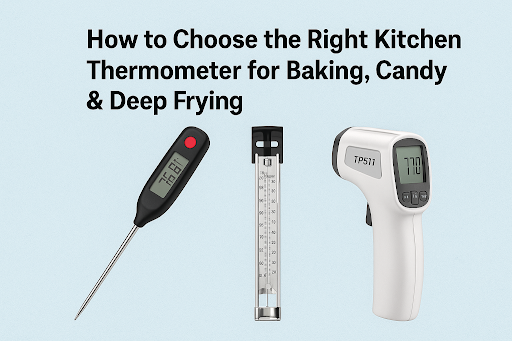
1. Instant-Read Digital Thermometers
Use a small electronic sensor at the tip of a thin probe to take a rapid temperature reading (usually 2–5 seconds). Best for baking (checking internal temperature of meats, poultry, and bread) and general cooking. Key feature: speed and wide temperature range.
2. Long-Probe Thermometers (Leave-in)
Feature a long probe connected by a heat-resistant wire to a digital base unit, allowing you to monitor temperatures while the oven door is closed. Best for roasting, grilling, and smoking large cuts of meat over a long period. Key feature: continuous monitoring and alarm settings.
3. Candy and Deep-Fry Thermometers
Typically a sealed glass or metal tube with a high-temperature range liquid (or a durable digital probe) designed to withstand the heat of boiling sugar and hot oil, usually with a pot clip to secure them to the side of a pot. Best for boiling sugar and oils. Key feature: high-temperature tolerance and a secure pot clip.

Choosing the Best Thermometer for Your Task
| Application | Best Thermometer Type | Key Considerations |
|---|---|---|
| Baking/Roasting | Instant-Read Digital | Accuracy for safe doneness; speed to minimize heat loss |
| Candy Making | Candy Thermometer | High-temperature range: 212°F to 400°F+ |
| Deep Frying | Deep Fry Thermometer | Long probe for oil safety; durability for prolonged high heat |
Maintenance and Safety Tips
Calibration Check: for maximum accuracy, regularly check your thermometer (especially digital ones) in an ice water bath — it should read 32°F or 0°C. Safety First with Oil: when using a deep fry thermometer, ensure the probe tip is fully submerged but not touching the bottom of the pot, and never leave hot oil unattended. Cleaning: always wipe the probe or stem with a damp cloth immediately after use, and avoid submerging the main digital unit of non-waterproof thermometers.
Kitchen Thermometers at Scispectrum
We supply instant-read, long-probe, and candy/deep-fry thermometers from ThermoPro and other trusted brands.
Frequently Asked Questions
Conclusion
Temperature control is the secret ingredient that separates good cooking from truly great results. Whether you're baking a perfectly moist cake, crafting silky homemade caramel, or achieving golden, crisp fried chicken, the right thermometer takes the guesswork out of the process.
Browse Kitchen Thermometers Get a Quote on WhatsApp