
Compare chlorine meters for checking disinfectant residual in water. Choose a model using the chlorine form your procedure measures, the expected range and the reagents specified for the instrument.
-
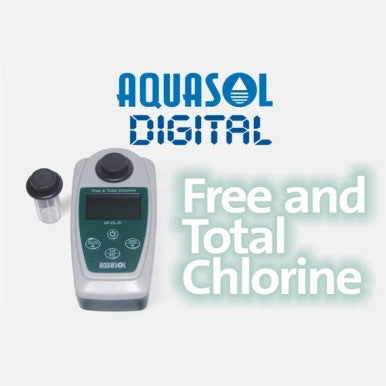 Aquasol
Digital Aquasol Model AP-CL-01 Chlorine Meter Portable Range 0 - 5 ppm, Resolution 0.01 ppm
SKU: AQU-CHM-AP-CL-01Rs. 31,270.00 Incl. GST -
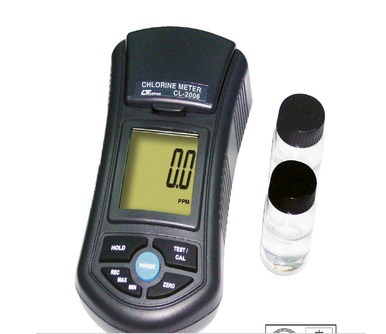
Choosing a chlorine meter for your water samples
Free chlorine or total chlorine?
Start by checking which result your test procedure asks you to report. Free chlorine refers to the free available chlorine species in water. Total chlorine includes both free and combined chlorine. If your team must report both, confirm that the meter supports both tests and ask which reagent is used for each. If the task is a quick residual check at a dosing point, specify which residual you monitor and what action you take when the result is outside the target. This helps narrow the choice before comparing features or prices.
Check range near the decision point
Write down the lowest and highest chlorine residual you expect and the unit used in your records. Check resolution and accuracy near the point where an operator makes a decision. If samples from two locations differ substantially in concentration, confirm that the test method and meter cover both. Ask what the instrument displays when a sample is above range and follow the procedure in its manual. If dilution is permitted by your method, document it and use the specified water and technique. The range on a datasheet only applies under the conditions described for that instrument and reagent system.
Allow for the reagent workflow
Many photometric chlorine tests use DPD reagents, which develop a colour in the sample. A meter reads the resulting colour under specified conditions. Confirm the reagent part number, whether you need free or total chlorine packs, and how many tests each pack covers. Ask about expiry and storage instructions before ordering for several sites. Check if the kit includes sample cells, caps and starter reagents. A reagent reorder plan matters when the meter will be used daily. Keep the blanking, timing and sample handling steps consistent with the instrument manual and your test method.
Decide where you need the reading
A portable meter is useful when the operator checks water at a tank outlet, several distribution points or a treatment plant. Confirm the power supply, carrying case and protection needed at the sampling location. If readings go into a shared log, check how the operator will record the test type, sample point, units and time. For continuous monitoring, specify the flow cell, installation and output requirements separately. A portable sample test and an installed analyser serve different workflows, even when the results are reported in the same units.
Prepare a quote request with enough detail
Send the sample type, expected residual, free or total chlorine requirement, number of sampling points and approximate tests per week. Include any method or documentation requirement and say whether you already hold a stock of reagents. If replacing an older model, share the meter label and current reagent part number. Ask the quote to identify the exact instrument, compatible reagent packs and replacement sample cells. Comparing a complete kit makes it easier to budget for routine testing and reduces the chance of ordering a meter before its consumables are available.
Request a quote and share your application, required specifications and quantity.