
Shop pH calibration buffer solutions for laboratory and handheld meters. Start with the exact buffer values your meter or SOP specifies, then choose the bottle size and lot documentation that fit your calibration routine.
-
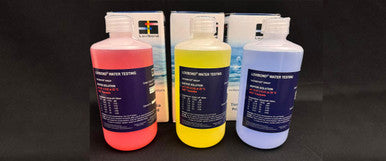 Lovibond
LOVIBOND 99% Purity PH buffer solutionSet (4.01 / 7.00 / 10.01), Size 500mL
SKU: LOV-BF-SLN-4.01Rs. 1,475.00 Incl. GST -
-
-
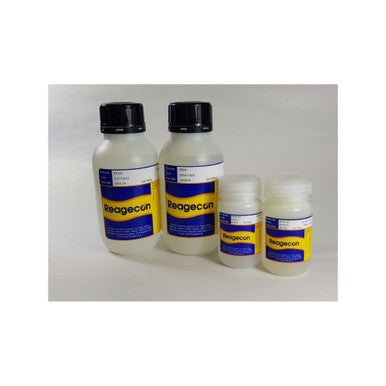
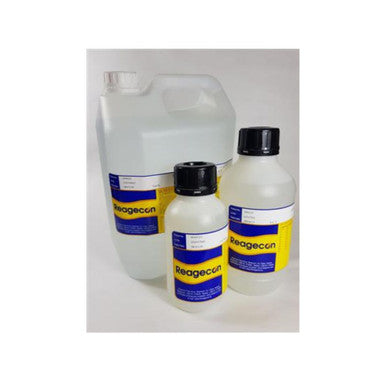
 Reagecon
 pH 10.01 Buffer Solution 500mL | NIST Traceable Calibration Standard
Rs. 1,475.00 Incl. GST -
-
How to choose pH calibration buffers
Match the buffer group in your meter
Open the meter's calibration settings or check the manual before ordering. Some instruments recognise one or more preset groups and use the selected group to identify a buffer automatically. A method might specify pH 6.86 and 9.18 while another uses pH 7.00 or 7.01 and 10.01. These labels describe different nominal values. Do not substitute the nearest number unless the instrument can accept that value and the method permits it. For manual entry, confirm how the meter handles the value at the actual buffer temperature.
Choose calibration points around the expected sample pH
When the instrument and SOP allow it, choose two or more accepted buffers that bracket the expected readings. A team measuring acidic samples may select a near-neutral and an acidic point. A team measuring alkaline samples may select a near-neutral and an alkaline point. If the same bench handles both, check whether the meter and method support a three-point calibration. For work near the extremes, verify that the electrode, buffers and meter can support that procedure before ordering a high or low pH standard.
Use the value at the buffer temperature
The assigned pH of a buffer can vary with temperature. Check the bottle or certificate for the reference temperature and the value table, and follow the meter instructions for automatic recognition or manual entry. The printed nominal value may be specified at 25 °C. Before accepting a reading, allow the buffer and sensor to reach the conditions required by your procedure. Recording the buffer temperature and lot can make it easier to investigate differences between shifts or calibrations.
Choose a pack size your team can use cleanly
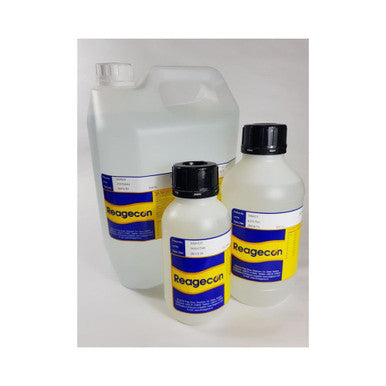
A larger bottle can suit a shared bench with frequent calibrations, provided the contents will be used within the applicable shelf life and any limit after opening. Smaller packs may fit a field kit or a team that rarely uses an alkaline buffer. Pour a fresh portion into a clean container for each calibration, keep the stock bottle closed, and do not return used buffer to it. Mark the opening date if your procedure calls for it and check the expiry and storage conditions before use.
Know which documents your lab needs
For QC purchasing, specify whether you require a lot-specific certificate, the stated uncertainty, a traceability statement or the supplier's safety documentation. A product description alone does not establish which documents will accompany a particular bottle. Ask for the exact product code and documentation when issuing the order. Keep the bottle label and certificate linked in your records if they support a calibration log. A buffer used for pH calibration serves a different purpose from electrode storage solution or reference electrolyte.
If the meter rejects a fresh buffer
Check that the meter is in the right buffer group, the sensor and reference junction are sufficiently immersed, and the temperature reading is plausible. Try a fresh portion from an in-date bottle. If the failure continues, check the probe condition and follow the manufacturer's cleaning and recalibration procedure before changing acceptance settings. For a quotation, send the instrument model, required buffer values, preferred pack size, quantity and documentation needs. If you are matching an existing order, include the brand and product code printed on the label.
Related collections: pH Meters · Electrodes & Probes
Request a quote and share your application, required specifications and quantity.