How to Choose the Right Temperature Data Logger for Your Laboratory
Scispectrum Lab Essentials
How to Choose the Right Temperature Data Logger for Your Laboratory
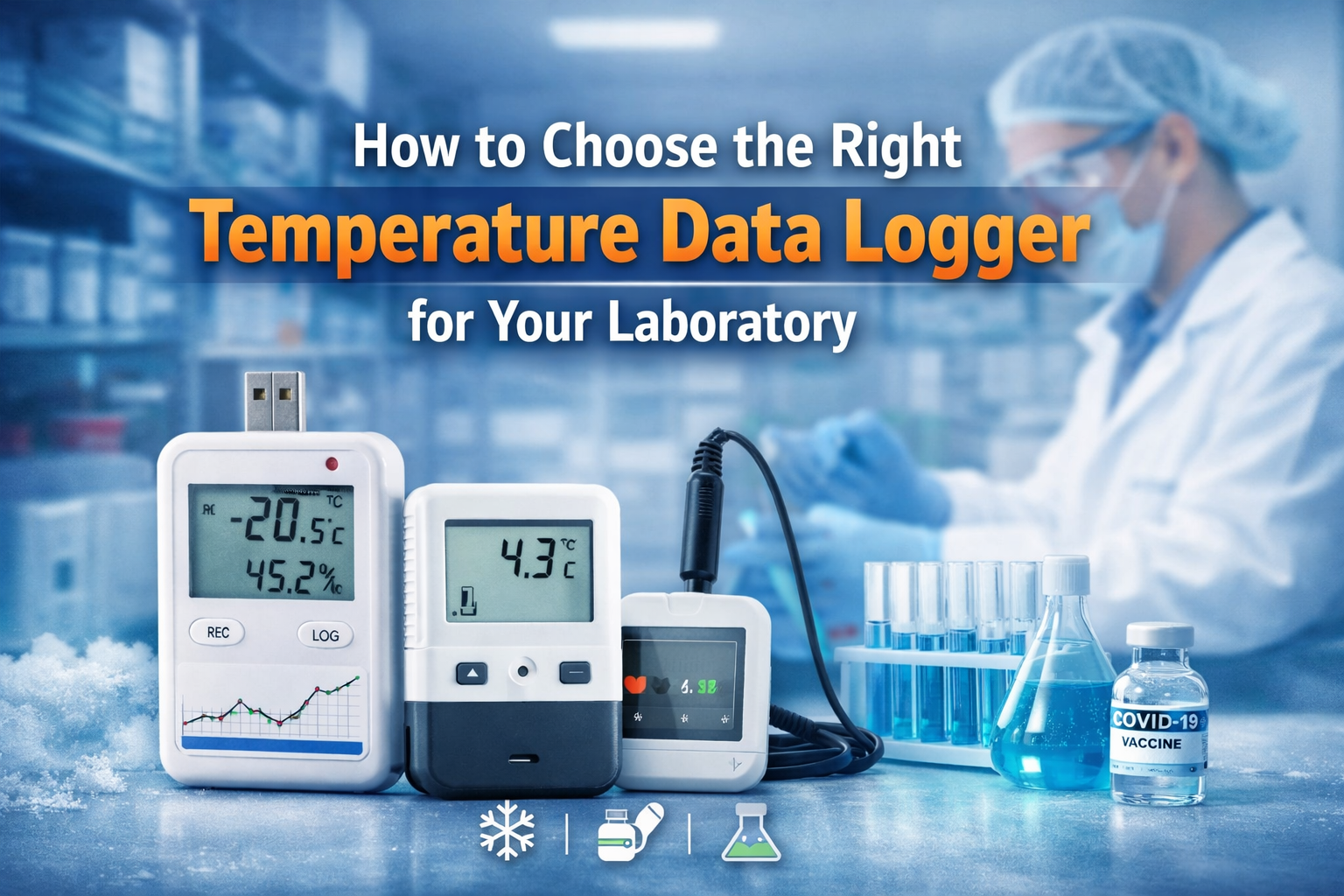
Temperature control plays a critical role in many laboratory processes. From storing sensitive samples to maintaining stable environmental conditions, accurate temperature monitoring ensures reliable results and compliance with regulatory standards. Laboratories working in pharmaceuticals, environmental testing, food safety, and research must continuously track temperature conditions to protect samples and maintain data integrity.
Temperature Data Logger: An electronic device designed to automatically record temperature readings over a period of time. These devices store temperature data at regular intervals, allowing laboratories to monitor environmental conditions and review temperature history whenever needed. Most consist of a temperature sensor, internal memory, a battery-powered system, and software or USB interface for downloading data.
Temperature data loggers are commonly used in laboratories, cold storage units, refrigerators, freezers, incubators, and transportation environments where temperature stability is critical.
Why Temperature Monitoring Is Important in Laboratories
Sample Protection — many biological samples, chemicals, and reagents must be stored within strict temperature ranges. Even small fluctuations can damage samples or alter experimental results. Regulatory Compliance — laboratories in pharmaceutical and healthcare sectors must comply with strict guidelines such as Good Laboratory Practices (GLP) requiring proper environmental monitoring. Data Accuracy — environmental conditions can directly affect laboratory measurements. Quality Control — temperature logs provide documented evidence that laboratory conditions remained within acceptable limits.
Types of Temperature Data Loggers
USB Temperature Data Loggers
Compact devices that store temperature data internally. Users connect the device to a computer via USB to download recorded data. Advantages: easy to use, portable, cost-effective. Widely used for refrigerator monitoring and sample transportation.
Wireless Data Loggers
Transmit temperature readings in real time to a central monitoring system using Wi-Fi or other wireless technologies. Advantages: real-time monitoring, remote access to data, instant alerts for temperature deviations. Ideal for large laboratories or facilities managing multiple storage units.
Multi-Channel Data Loggers
Allow users to monitor several temperature points simultaneously. Advantages: monitor multiple locations, ideal for large storage rooms or industrial environments, centralized data collection.
Temperature and Humidity Data Loggers
Measure both temperature and humidity simultaneously, useful for environmental monitoring and storage conditions where both parameters matter.

Key Features to Consider When Choosing a Temperature Data Logger
Accuracy
Accuracy is one of the most critical specifications. Laboratories require reliable readings to maintain compliance and ensure accurate monitoring.
Memory Capacity
Data loggers store readings at specific time intervals. Devices with larger memory capacity can store more data before needing to be downloaded — especially important for long-term monitoring applications.
Battery Life
Long battery life ensures uninterrupted monitoring. Many modern data loggers can operate for months or even years on a single battery.
Sampling Interval
The sampling interval determines how often the device records temperature readings. Some applications require frequent measurements, while others may need less frequent monitoring.
Software Compatibility
Most temperature data loggers come with software that allows users to download recorded data, generate reports, and analyze temperature trends.
Applications of Temperature Data Loggers
Pharmaceutical Laboratories
Pharmaceutical labs must maintain strict temperature control when storing medicines, vaccines, and chemical reagents.
Vaccine Storage and Cold Chain Monitoring
Vaccines are extremely sensitive to temperature fluctuations. Data loggers help ensure that vaccines remain within recommended storage temperatures during storage and transportation.
Environmental Testing Laboratories
Environmental labs monitor temperature conditions during sample storage and analysis to maintain accuracy in testing procedures.
Food Testing Laboratories
Food safety laboratories monitor storage conditions to ensure that food samples are preserved under appropriate temperature conditions.
Research Laboratories
Many research experiments require controlled environmental conditions. Data loggers help scientists maintain stable laboratory environments.
Choosing the Right Temperature Data Logger for Your Lab
Ask the following questions: Do you need real-time monitoring or periodic data recording? How many locations need to be monitored? What level of accuracy is required? How frequently do you need temperature readings? Do you require humidity monitoring as well?
Data Loggers at Scispectrum
We supply temperature, humidity, and sound level data loggers from Tzone and Lutron, sourced through authorised distributors with GST invoicing.
Frequently Asked Questions
Conclusion
Temperature monitoring is an essential aspect of laboratory operations. From protecting sensitive samples to maintaining regulatory compliance, reliable temperature tracking ensures the accuracy and integrity of laboratory work. By choosing the right data logger with suitable accuracy, storage capacity, and monitoring features, laboratories can maintain stable conditions and ensure consistent results.
Browse Data Loggers Get a Quote on WhatsApp