How to Choose a pH Meter for Soil Testing: A Simple Guide for Beginners
Scispectrum Lab Essentials
How to Choose a pH Meter for Soil Testing: A Simple Guide for Beginners
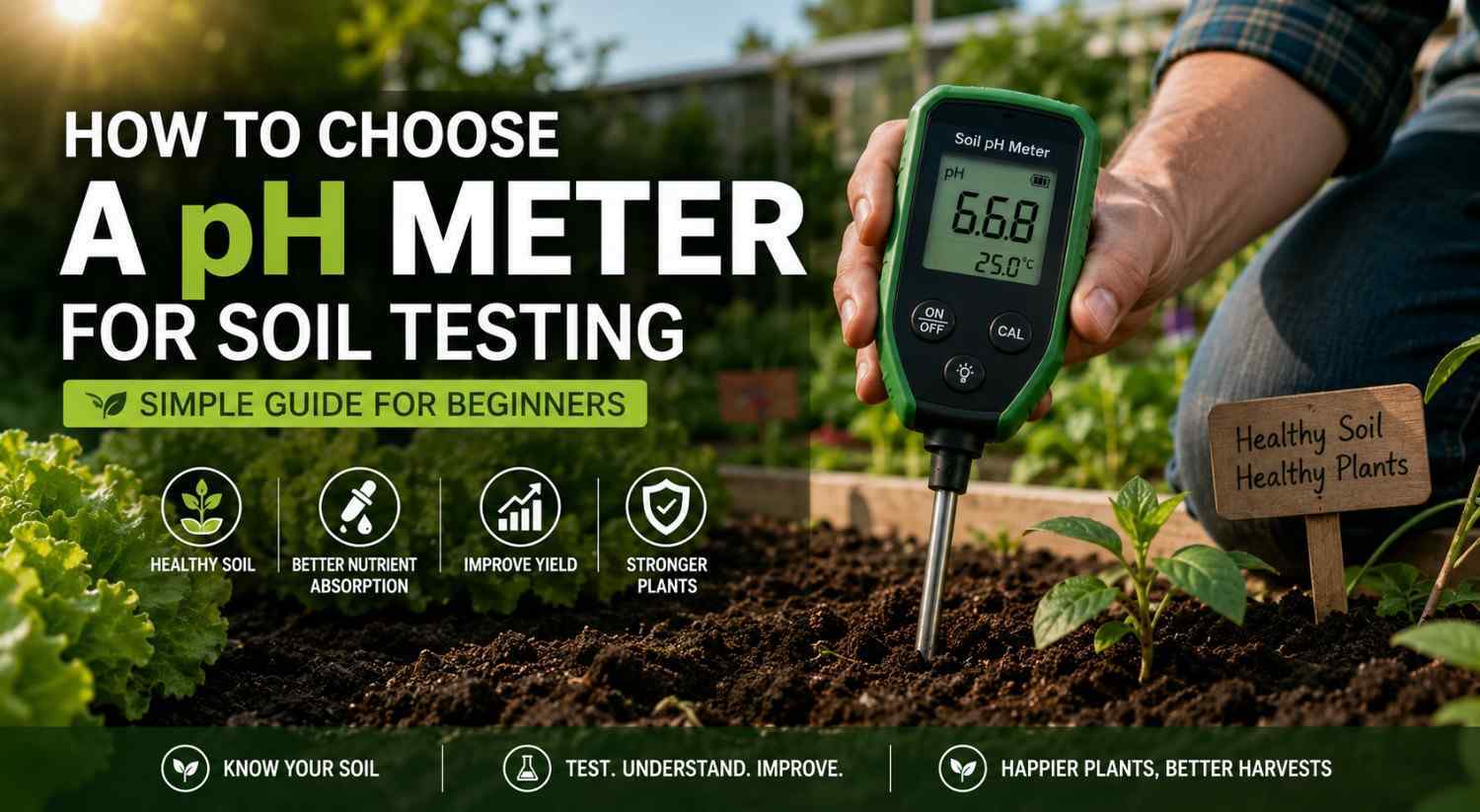
Did you know that the secret to thriving plants starts beneath the surface? Soil pH — a measure of how acidic or alkaline your soil is — affects how well plants absorb nutrients. Too acidic (pH < 6.0) or too alkaline (pH > 7.5), and your plants might starve even in rich soil. Testing soil pH helps you fix nutrient deficiencies, choose the right plants for your garden, and improve fertilizer efficiency.
What Is a Soil pH Meter?
A soil pH meter is a device that measures the acidity/alkalinity of soil. Unlike water pH meters, soil meters have rugged probes designed to penetrate soil and give instant readings. A metal tip detects hydrogen ions in soil moisture, and the display shows the pH value on a 0–14 scale.
Types of pH Meters for Soil Testing
Pen-Type Soil pH Meters
Best for home gardens and quick checks. Pocket-sized, affordable, and many need no batteries.
Portable Soil pH Meters
Best for farms and fieldwork. Durable, with data storage and longer probes for deeper testing.
Multiparameter Meters
Best for advanced users testing pH plus nutrients (nitrogen, moisture). Versatile but pricier.
Benchtop Soil pH Meters
Best for labs and precision agriculture. High accuracy with multiple calibration points.

5 Key Features to Look For
Probe length: short (6–8 cm) suits potted plants; long (15–30 cm) is for deep soil testing. Durability: rust-proof (stainless steel) probes survive rocky soil. Accuracy: ±0.1 pH for most gardens, ±0.01 for labs. Calibration: automatic calibration saves time. Extra metrics: moisture, light, or nutrient sensors on multiparameter meters.
How to Use a Soil pH Meter in 4 Steps
- Prepare Soil: remove debris, moisten if dry.
- Insert Probe: push vertically into soil (depth = root zone).
- Wait & Read: hold for 60 seconds until reading stabilizes.
- Clean & Store: wipe probe, store dry.
Soil pH Meters at Scispectrum
We supply pen-type, portable, multiparameter, and benchtop pH meters suited to home gardens through research-grade agriculture testing.
Frequently Asked Questions
Conclusion
Choosing the right soil pH meter doesn't require a science degree. Match the tool to your needs: pen-type meters for casual gardeners, durable portables for farmers, and lab-grade benchtops for professionals.
Browse pH Meters Get a Quote on WhatsApp