Must-Have Instruments for Pharmaceutical & Quality Control Laboratories
Scispectrum Lab Essentials
Must-Have Instruments for Pharmaceutical & Quality Control Laboratories

Quality control is the backbone of pharmaceutical manufacturing and food processing. From raw material inspection to in-process checks and final product release, laboratories rely on accurate and reliable instruments to ensure product safety, regulatory compliance, and consistent quality. Pharmaceutical and QC laboratories operate under strict guidelines set by pharmacopeias and regulatory authorities, so having the right instruments is not optional — it is essential.

1. Balances
Accurate weighing is fundamental to all laboratory operations. Analytical and precision balances are used for weighing raw materials, active pharmaceutical ingredients (APIs), excipients, and test samples. High-precision balances ensure formulation accuracy, support batch consistency, and are critical for GMP compliance.
2. Stability Chambers
Stability chambers are essential for evaluating how pharmaceutical products behave under controlled temperature and humidity conditions over time. Key applications: shelf-life studies, stability testing as per ICH guidelines, packaging validation.
3. Incubators
Incubators provide controlled temperature environments for microbiological and biological testing — microbial culture growth, sterility testing, and quality control of pharmaceutical and food samples. Uniform temperature distribution and reliable control are crucial for reproducible results.
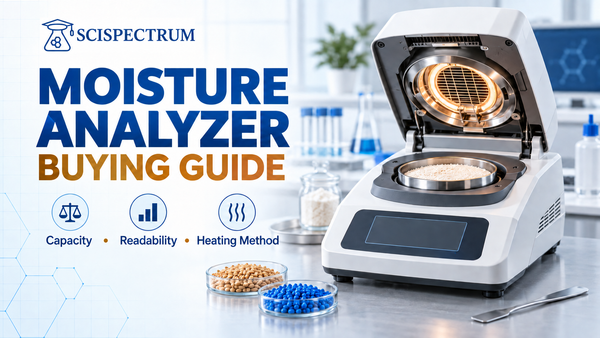
4. Ovens
Laboratory ovens are used for drying, sterilization, and heat-based testing applications: moisture removal, glassware drying, thermal testing of materials. Ovens support routine lab preparation and ensure contamination-free processes.
5. Melting Point Apparatus
Melting point determination is a key method for identifying substances and assessing purity — confirming identity of raw materials, detecting impurities, and supporting pharmaceutical quality checks. Consistent melting point results are essential for compound verification and QC documentation.
6. Viscometers
Viscosity measurement helps determine the flow behavior of liquids and semi-liquids — syrups, suspensions, emulsions, and food products like sauces. Accurate viscosity control ensures product performance and consumer acceptance.
7. Spectrophotometers
Spectrophotometers are widely used for quantitative and qualitative analysis of samples based on light absorption — assay analysis, concentration determination, and color and purity testing. They play a vital role in both routine QC testing and research laboratories.
8. Tablet Disintegration Test Apparatus
Tablet disintegration testing determines how quickly a tablet breaks down under specified conditions — ensures proper drug release, meets pharmacopeial standards, and supports batch release decisions. This test is a critical quality parameter in solid dosage manufacturing.
9. Tablet Friability Apparatus
Friability testing measures the mechanical strength of tablets during handling and transport — detects chipping and breaking, ensures packaging and transport durability, and maintains product integrity. Complements disintegration and hardness testing in QC labs.
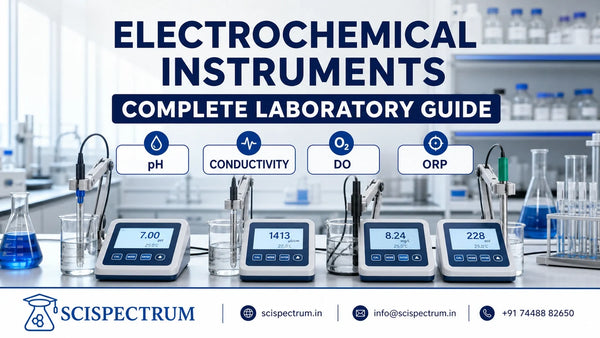
10. Dissolved Oxygen / Oxygen Meters
Oxygen measurement is important for both product quality and laboratory safety — monitoring oxygen levels in controlled environments, supporting food and pharmaceutical process control, and ensuring workplace safety in enclosed spaces.
Pharma QC Instruments at Scispectrum
We supply the full range of instruments covered in this guide, sourced from established brands with GST invoicing for institutional procurement.
Frequently Asked Questions
Conclusion
Whether you are setting up a new pharmaceutical laboratory or upgrading an existing quality control facility, investing in the right instruments is crucial. Each piece of equipment plays a specific role in ensuring accurate testing, regulatory adherence, and product excellence. By choosing reliable laboratory instruments and maintaining them properly, pharmaceutical and food laboratories can achieve consistent results, pass audits confidently, and deliver safe, high-quality products to the market.
Browse All Pharma QC Instruments Get a Quote on WhatsApp