pH Buffer Expiry After Opening: A Lab Handling and Contamination Checklist
SciSpectrum Lab Essentials
pH Buffer Expiry After Opening: A Lab Handling and Contamination Checklist

A pH buffer bottle says it expires next year. Someone opened it six weeks ago. Can you still use it to calibrate the meter today?
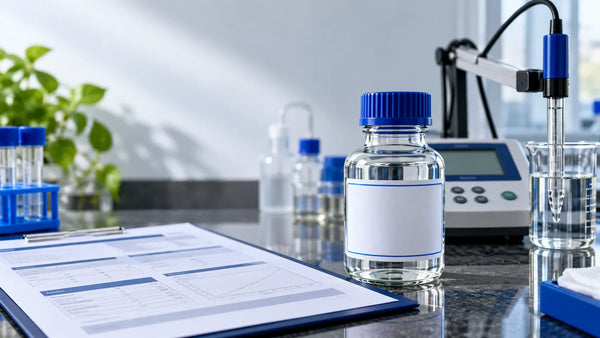
The printed expiry date is only one check. Once a bottle is opened, air, a dirty cap or a used electrode can affect the liquid. Start with the buffer's own instructions and your lab's procedure. Then check the opening date and how the bottle has been handled. A buffer that looks clear can still be unsuitable for a calibration record.
Why the opening date matters
Manufacturers date their bottles and issue lot certificates for the conditions they specify. METTLER TOLEDO says its stated buffer quality is guaranteed for unopened bottles that have not expired. After opening, it advises users to mark the first-use date, keep bottles tightly closed, take fresh portions for calibration and discard suspect buffer. See its pH buffer handling guidance.
Basic or alkaline buffers deserve particular care. Carbon dioxide from air can change their pH. The Thermo Scientific Orion pH handbook gives a shorter opened-bottle period for its pH 10.01 buffer than for its other pH buffers. Hanna's support guidance also distinguishes common pH 4 or 7 buffers from more basic buffers. These are examples of manufacturer guidance, not a replacement rule for every brand.
Even if a bottle is within its dates, poor handling can spoil it early. A used electrode, a pouring lip touched by a beaker, an uncapped bottle or liquid poured back after calibration all create a risk.
How to set a use-by date after opening
Check three things: (1) the printed expiry or certificate validity, (2) the manufacturer's opened-bottle instructions for that exact buffer, and (3) the period in your approved lab SOP. The earliest applicable date controls routine use. A stricter lab rule is allowed; a longer home-made rule should not override the product instructions.
| Information | Example | Action |
|---|---|---|
| Printed bottle expiry | 30 November | Do not use beyond this date. |
| Manufacturer guidance for this bottle | Four weeks after opening | Opened 18 October → 15 November. |
| Approved lab SOP | 14 days after opening | Opened 18 October → 1 November. |
| Routine use-by date | 1 November | This is the earliest applicable date, provided the buffer remains in good condition. |
Those dates are only an example of the calculation. Do not copy “four weeks” or “14 days” onto a real bottle without checking its actual instructions and your SOP. If the maker gives no clear after-opening period, ask for product-specific guidance or apply the validated rule in your lab procedure.
A six-check routine before calibration

- Match the bottle to the certificate. Confirm the product code, lot number and printed expiry. Our certificate-reading guide shows where to find the assigned pH and temperature information.
- Mark the first-use date. Write it on a lab label when you first open the bottle. Keep the original product and lot details visible.
- Set the use-by date. Apply the earliest limit from the bottle, maker's guidance and SOP. Record how you calculated it if your system requires that.
- Pour into a clean vessel. Take only the amount needed. Never place the electrode into the stock bottle. METTLER TOLEDO recommends a fresh portion for each calibration.
- Inspect the bottle and handling history. Check the cap, storage conditions and any sign of contamination. If the bottle was left open or another solution may have entered it, do not rely on the printed date.
- Record the calibration. Note the lot, open/use-by dates, buffer temperature, meter ID, analyst and result. Dispose of used buffer; do not pour it back.
Where contamination often enters
The easiest mistake is calibrating directly in the stock bottle. That transfers residue from an electrode into all the buffer left for later users. Another mistake is pouring a used portion back because it still looks clean. Both Hanna and METTLER TOLEDO advise against this.
Keep the cap on except while dispensing. Avoid touching the bottle opening with a pipette tip or beaker. Store it as the maker directs, away from conditions that could change the liquid. If an aliquot has been out on the bench during calibration, treat it as used material rather than returning it to stock.
A copyable bottle label and log entry
Keep the label short enough that people actually use it:
Lot: [from bottle]
Opened: [date, initials]
Use by: [earliest applicable date]
Storage: [maker's instruction or controlled location]
In the calibration log, include the same lot and opening details, plus the value used at the measured temperature. If the bottle is replaced early, record why: suspected contamination, poor storage, failed verification or damage. This makes the next calibration easier to review and stops an unsuitable bottle from returning to the bench.
Common questions
Can I keep using buffer until the printed expiry date?
Only if its opened-bottle period and your SOP still allow it, and the bottle has been handled correctly. The printed date alone does not answer the question.
Should pH 10 buffer be replaced sooner?
Often, yes: alkaline buffers are more sensitive to carbon dioxide from air. Check the exact manufacturer's instructions; do not apply another brand's interval to yours.
Can I reuse the buffer poured into a beaker?
Do not pour it back into the stock bottle. For whether a dispensed portion can be used again during the same session, follow the buffer instructions and your lab SOP.
What if nobody wrote the opening date?
Do not guess it from the order date. Check your stock and calibration records. If you cannot establish that it is within the approved period, replace it for controlled calibration work.
Make opening a bottle a small, recorded event. Add the date, work out the correct use-by limit and use a clean portion each time. That habit protects both the calibration and the next analyst.
Need the right buffer format for your lab?
Tell SciSpectrum your meter model, buffer group, number of calibrations each week and certificate needs. We can check suitable bottle or sachet options and documentation before quoting. SciSpectrum Lab Essentials is a laboratory-instrument reseller.
Send your buffer requirements