Top 7 Essential Laboratory Instruments Every Testing Lab Needs in 2026
Scispectrum Lab Essentials
Top 7 Essential Laboratory Instruments Every Testing Lab Needs in 2026

1. UV-Visible Spectrophotometer
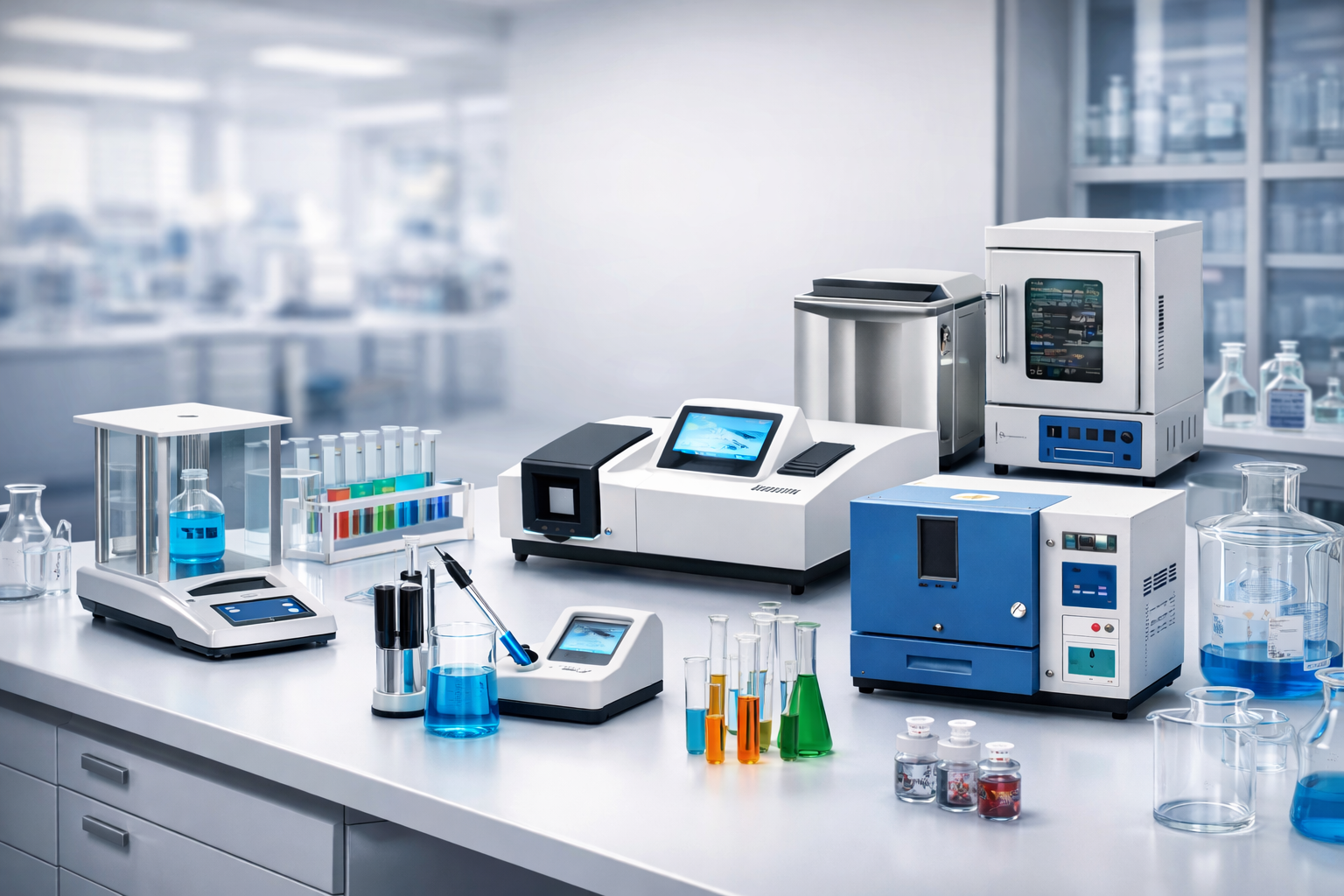
A cornerstone of any quantitative analysis, the UV-Vis spectrophotometer measures how much light a chemical substance absorbs. Key features to look for: wide wavelength range (190–1100 nm), high wavelength accuracy, stable optical system, user-friendly software, data storage capability. Applications: pharmaceutical analysis, water quality testing, chemical research, DNA/RNA concentration determination.
2. pH Meter
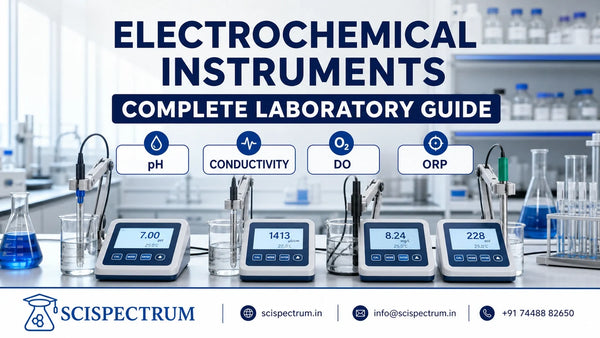
A pH meter measures the acidity or alkalinity of solutions critical for quality control. Key features: automatic temperature compensation, multi-point calibration (2 or 3 point), high-resolution display, durable electrode. Used in: pharma manufacturing, water testing labs, food processing labs, research institutions.
3. Hot Air Oven
A hot air oven is used for dry heat sterilization and thermal testing, eliminating moisture-sensitive contamination on glassware and metal instruments. Key features: uniform temperature distribution, digital PID temperature controller, over-temperature protection, stainless steel chamber.
4. Laboratory Incubator
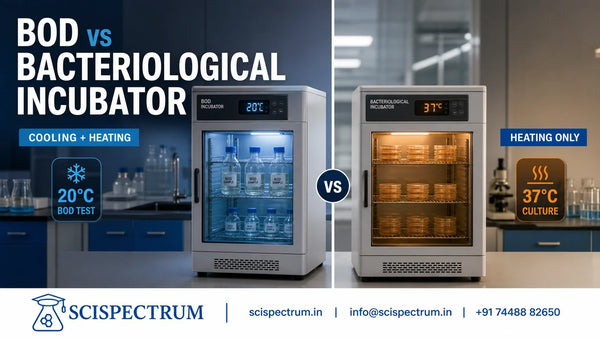
Incubators provide controlled temperature environments for microbial growth. Types commonly used: BOD incubator, bacteriological incubator, CO₂ incubator. Applications: microbiology testing, pharmaceutical stability studies, food testing labs. In 2026, energy-efficient and digitally controlled incubators are preferred for better accuracy and monitoring.
5. Analytical Balance
Precision weighing is fundamental in any laboratory. What makes a good analytical balance: high readability (0.1 mg or better), internal calibration, draft shield for stability, overload protection. Used in: chemical analysis, pharmaceutical formulation, research and development labs.
6. Autoclave
An autoclave sterilizes equipment using moist heat under pressure, ensuring complete sterilization for microbiology and healthcare labs. Features to consider: automatic pressure control, safety valves, stainless steel chamber, digital cycle control.
7. Conductivity Meter
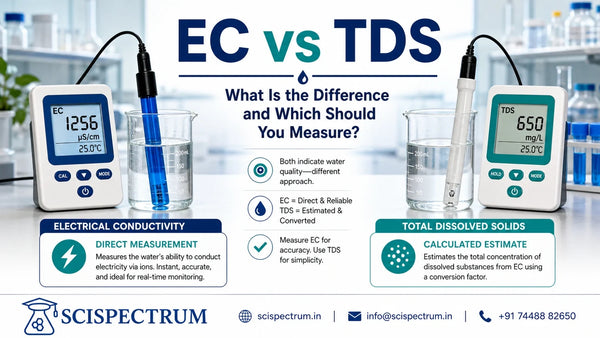
A conductivity meter measures ionic concentration in liquids. Common uses: water quality testing, environmental monitoring, industrial effluent testing. Important features: temperature compensation, multi-parameter capability (TDS/salinity), high measurement accuracy.
Key Buying Considerations in 2026
Before purchasing any testing lab equipment, consider: Accuracy & Precision — ensure the instrument meets your application's tolerance levels. Calibration Requirements — check ease of calibration and availability of certified standards. Compliance & Certification — look for instruments aligned with NABL and other regulatory standards. Service & Warranty — choose a reliable supplier offering installation support, training, AMC options, and quick service response.
Lab Instruments at Scispectrum
We supply all seven instrument categories above, sourced from established brands with GST invoicing for institutional procurement.
Frequently Asked Questions
Conclusion
Investing in the right analytical instruments is not just about purchasing equipment — it is about ensuring accuracy, compliance, and long-term efficiency. In 2026, laboratories must focus on quality, automation, and reliability when selecting laboratory instruments. If you are planning to upgrade or set up a testing laboratory, make sure these seven essential instruments are part of your procurement checklist.
Browse All Lab Instruments Get a Quote on WhatsApp