Autoclave vs Hot Air Oven: Complete Sterilization Guide for Modern Labs (2026)
Scispectrum Lab Essentials
Autoclave vs Hot Air Oven: Complete Sterilization Guide for Modern Labs
What Is an Autoclave?
An autoclave is a sterilization device that uses moist heat under pressure to destroy bacteria, viruses, fungi, and spores. It operates by generating steam at 121°C to 134°C and 15–30 psi, with sterilization times of 15–45 minutes depending on load. The combination of heat and pressure ensures deep penetration into materials.
Common applications: sterilization of culture media, surgical instruments, microbiology lab equipment, biomedical waste treatment. Pros: highly effective against spores, faster sterilization cycles, suitable for liquids and media. Limitations: not ideal for moisture-sensitive materials, higher water and energy usage.
What Is a Hot Air Oven?
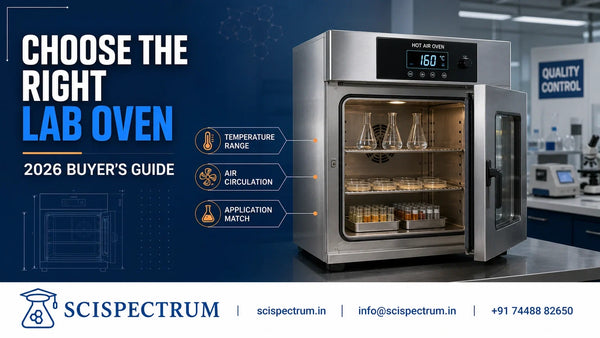
A hot air oven uses dry heat sterilization to eliminate microorganisms, relying on circulating hot air rather than steam. It typically operates at 160°C to 250°C with sterilization times of 1–2 hours. Dry heat kills microorganisms through oxidation and protein denaturation.
Common applications: glassware sterilization, metal instruments, powders and oils, moisture-sensitive materials. Pros: ideal for dry materials, no moisture damage, lower corrosion risk. Limitations: longer sterilization time, not suitable for liquids or culture media.
Autoclave vs Hot Air Oven: Key Differences
| Feature | Autoclave | Hot Air Oven |
|---|---|---|
| Type of Heat | Moist heat (steam) | Dry heat |
| Temperature Range | 121–134°C | 160–250°C |
| Sterilization Time | Shorter | Longer |
| Suitable Materials | Liquids, media, surgical tools | Glassware, metal, powders |
| Microbial Kill Efficiency | Very high (kills spores) | Effective but slower |
| Moisture Impact | Yes | No |

When Should You Choose an Autoclave?
Choose an autoclave if your lab handles microbiological cultures, liquid media preparation, infectious waste disposal, or medical/surgical tools. Autoclaves are mandatory in hospital labs and pharmaceutical units where compliance standards are strict. If your lab is NABL-focused or operates under GMP guidelines, an autoclave is often essential.
When Should You Choose a Hot Air Oven?
Choose a hot air oven if your application involves sterilizing glassware like petri dishes and flasks, dry metal instruments, oils, powders, and chemicals, or moisture-sensitive materials. Hot air ovens are ideal for quality control labs and material testing environments.
Key Buying Considerations
1. Capacity Requirements: choose chamber size based on daily workload and future expansion. 2. Temperature Uniformity: ensure even heat distribution for consistent sterilization. 3. Safety Features: over-temperature protection, automatic pressure release (for autoclaves), digital control panels. 4. Compliance & Certification: ensure the equipment meets regulatory and quality standards applicable in India. 5. Service & Support: reliable after-sales service, AMC options, and spare availability are crucial for long-term operation.
Sterilization Equipment at Scispectrum
We supply autoclaves and hot air ovens designed for precision and reliability in pharma, microbiology, and industrial QC labs.
Frequently Asked Questions
Conclusion
Sterilization standards are stricter than ever, and laboratories can no longer afford inefficiencies or partial sterilization. When deciding between an autoclave and a hot air oven, the choice should be based on material type, compliance requirements, and operational needs. Both are essential components of modern sterilization equipment for labs.
Browse Sterilization Equipment Get a Quote on WhatsApp