How to Choose the Right Laboratory Oven for Your Application (2026 Buyer’s Guide)
Scispectrum Lab Essentials
How to Choose the Right Laboratory Oven for Your Application
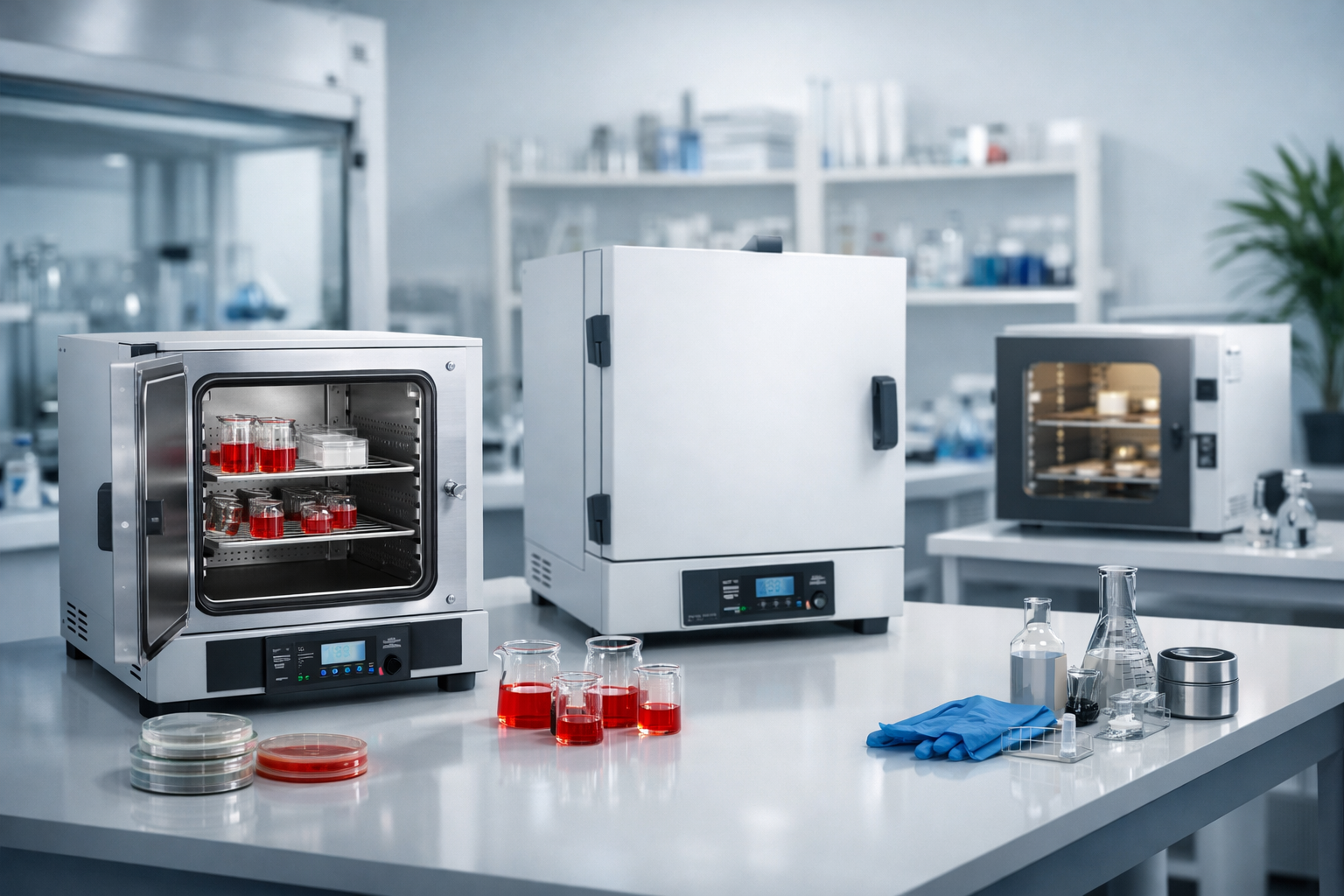
Laboratory Oven: A controlled heating device used for drying, sterilizing, curing, or conditioning samples and materials, operating by circulating hot air uniformly inside an insulated chamber to maintain a stable temperature. Typical range: 50°C to 300°C depending on the model.
Laboratory ovens are widely used in pharmaceutical laboratories, microbiology labs, food and dairy testing facilities, environmental testing laboratories, and research institutions.
Types of Laboratory Ovens
Hot Air Oven
Uses forced air circulation to distribute heat evenly. Best for: sterilizing glassware, drying laboratory instruments, microbiological applications, pharmaceutical testing. Advantages: cost-effective, simple operation, reliable temperature uniformity. The most commonly used option in microbiology lab equipment setups.
Vacuum Oven
Removes air and moisture from the chamber before heating, allowing drying at lower temperatures. Best for: heat-sensitive materials, pharmaceutical powders, chemicals, moisture-sensitive samples. Advantages: prevents oxidation, faster drying, suitable for delicate samples. Typically more expensive but essential for specialized applications.
Drying Oven
Designed specifically for moisture removal and sample conditioning. Best for: food testing laboratories, soil and environmental sample preparation, research labs. Advantages: controlled drying, consistent moisture analysis, energy-efficient designs.

Key Factors to Consider Before Buying
1. Temperature Range: ensure the oven supports the maximum temperature your application requires. 2. Chamber Capacity: available in various sizes (28L, 45L, 90L, 150L, 250L, etc.) — choose based on sample volume, future expansion plans, and available lab space. 3. Temperature Uniformity: uniform heating prevents inconsistent results — look for forced air circulation and a PID temperature controller. 4. Digital Controls: modern ovens include digital PID controllers, timers, and over-temperature safety alarms. 5. Insulation Quality: good insulation improves energy efficiency, temperature stability, and operational safety. 6. Compliance Requirements: ensure the oven supports NABL standards, GMP compliance, and ISO documentation. 7. After-Sales Support: service availability and spare parts access are critical for minimizing downtime.
Application-Based Buying Guide
Pharmaceutical Laboratories: hot air oven for sterilization, vacuum oven for moisture-sensitive formulations — compliance and documentation are essential. Microbiology Labs: hot air ovens for sterilizing glassware, culture preparation, and routine lab operations. Food & Dairy Testing Labs: drying ovens for moisture analysis, sample preparation, shelf-life studies. Environmental Testing Labs: ovens suitable for soil drying, water sample residue testing, pollution analysis. Research Institutions: versatile ovens with programmable controls for experimental applications.
Common Mistakes Buyers Make
Choosing lower capacity to save cost, ignoring temperature uniformity specifications, overlooking warranty and service support, not verifying compliance compatibility, and selecting the wrong oven type for the application. Making the right decision ensures long-term reliability and cost savings.
Laboratory Ovens at Scispectrum
We supply hot air, vacuum, and drying ovens from established brands with GST invoicing for institutional procurement.
Frequently Asked Questions
Conclusion
Understanding how to choose the right laboratory oven is essential for achieving accurate results and regulatory compliance. The decision should be based on application requirements, temperature range, capacity, compliance needs, and long-term service support.
Browse Laboratory Ovens Get a Quote on WhatsApp